Quick answer: Cornwall’s headline wildlife is grey seals (the coast holds a large share of Britain’s population), the red-billed chough back on the cliffs, basking sharks and dolphins offshore in summer, otters on every river, adders and lizards on the heaths, and now beavers. The best way to help protect it is to watch it responsibly, record what you see, and support the charities doing the work — Cornwall Wildlife Trust, the Cornwall Seal Group Research Trust and Surfers Against Sewage chief among them. Where, when and how, below.
Cornwall packs an extraordinary amount of wildlife into a narrow peninsula: two coasts of cliffs and coves, drowned river valleys, wild moorland and warm Atlantic water that brings visitors from far out to sea. Much of it is doing better than it was — choughs and beavers are back, seals are thriving — and much of it is fragile, threatened by disturbance, pollution and the loss of the wild edges it needs. This guide covers what you can see and where, the people protecting it, and the genuinely useful things a visitor or resident can do to help.
Table of Contents
- Cornwall’s wildlife: what you can see
- Where and when to see it
- What threatens it
- Who is protecting it
- How you can help
- Personal insights and experiences
- FAQ
- References and resources
Cornwall’s wildlife: what you can see
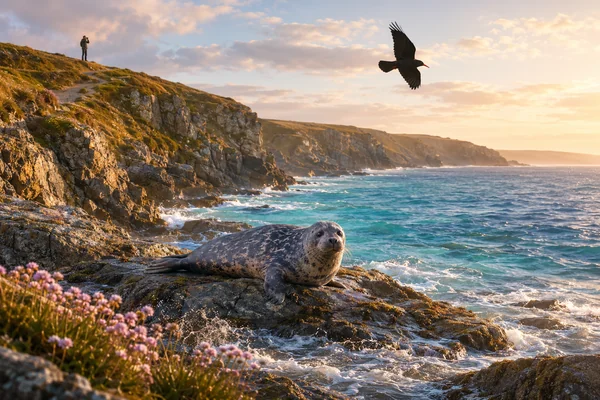
- Grey seals — Cornwall’s most reliable wild spectacle: hauled out on rocks and remote beaches, bobbing in harbours, and pupping on quiet coves from autumn into winter.
- Choughs — the red-billed, red-legged crow on Cornwall’s coat of arms, absent for 30 years and back on the cliffs since 2001, tumbling in the wind above the coast path.
- Basking sharks — the second-largest fish in the world, cruising the surface with mouths open through summer plankton blooms off the west coast.
- Dolphins and porpoises — common dolphins and harbour porpoises around the coast year-round; bottlenose pods, occasionally, in the bays.
- Otters — back on virtually every Cornish river; rarely seen, often nearby, best at dawn or dusk.
- Adders and lizards — Britain’s only venomous snake basks on the moors and heaths on sunny mornings; leave it be and it leaves you be.
- Seabirds — gannets, guillemots, razorbills and fulmars on the cliffs; kittiwakes; and on the Isles of Scilly, puffins.
- Beavers — back in Cornwall since 2017; see our guide to rewilding in Cornwall.
- The everyday cast — buzzards over every valley, deer at the woodland edges, badgers, hares on the moor, and hedgehogs, damselflies and newts in gardens that leave them room.
Where and when to see it
Seals
Godrevy and Mutton Cove near Hayle have a famous haul-out you can watch from the clifftop; Looe Island, a Cornwall Wildlife Trust marine reserve off our own south-east coast, has a resident colony visible from boat trips out of Looe; and the wildlife-watching boats from St Ives, Padstow, Newquay and Falmouth all find seals almost without trying. Autumn to early winter is pupping season, when the fluffy white pups appear on quiet coves — and when keeping your distance matters most.
Choughs
The Lizard peninsula, where they returned, remains the best bet, followed by the far west around Land’s End and increasingly the north coast. Walk the coast path in spring and summer, listen for the ringing “chee-ow” call, and look for a crow with a red bill flying like it’s enjoying itself.
Basking sharks and dolphins
Basking sharks arrive with the plankton from around May and can linger into September, mostly off the west coast between the Lizard and St Ives — sometimes visible from headlands on calm days, more reliably from boats. Dolphins are year-round; Falmouth Bay and the boat trips from Falmouth and Penzance give the best odds. Any headland with a bit of height and a calm sea is worth ten minutes with binoculars — Cape Cornwall, Gwennap Head and Pendeen Watch are seawatching classics.
Everything else
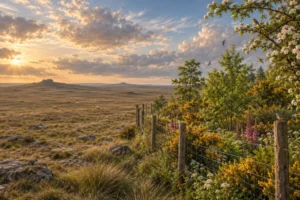
Bodmin Moor and the Lizard heaths for adders and lizards on warm mornings; the estuaries — Hayle, the Camel, the Fal — for wading birds in winter, with the RSPB’s Marazion Marsh and Hayle reserves the easiest access; the river-valley woodlands for kingfishers, dippers and the chance of an otter at dusk. And your own garden, if you give it a pond and stop tidying, will surprise you within a season.
What threatens it
- Disturbance — the big one for seals. Walkers, paddleboarders, drones and dogs approaching a haul-out cause stampedes into the sea that injure adults and separate pups from mothers. If a seal is looking at you, you’re already too close.
- Pollution — sewage discharges, plastic and ghost fishing gear; the reason a Cornish surf town spawned a national campaigning charity.
- Loss of the wild edges — hedges grubbed out, verges over-mown, ponds filled, heaths and moors overgrazed.
- A warming, changing sea — shifting the plankton, the fish, and everything that follows them.
Who is protecting it
- Cornwall Wildlife Trust — the county’s conservation charity: more than 50 nature reserves on land and sea, the beaver project, marine strandings and the Your Shore network of community beach groups. Membership is the single most useful thing on this list.
- Cornwall Seal Group Research Trust — photo-identifies and monitors individual seals around the coast, campaigns against disturbance, and uses public sightings in its research.
- Surfers Against Sewage — born in St Agnes and now a national force on water quality and plastic; runs the beach cleans anyone can join.
- British Divers Marine Life Rescue — the people who respond when a seal or dolphin is stranded or injured; their hotline is the number to call.
- The National Trust and RSPB — between them caring for great stretches of the coast, the estuaries and the reserves where much of this wildlife lives.
- The Woodland Trust — planting and protecting the woods that hold the otters, dormice and bats.
How you can help
- Watch seals the right way: stay high and back on the cliff, keep quiet, no drones, dogs on leads near haul-outs, never approach a pup on a beach. Boat operators who slow down and stand off are the ones to book.
- Record what you see — a seal, a chough, a basking shark logged with the county records centre (ERCCIS) or the seal trust genuinely helps map how each species is doing.
- Join something — Cornwall Wildlife Trust membership, or adopt a seal through the seal trust.
- Give a morning — a Surfers Against Sewage or Your Shore beach clean is two hours, a bin bag, and a visibly better beach.
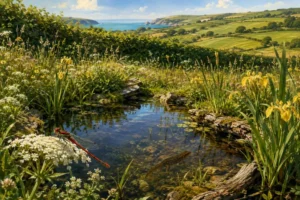
- Leave the wild edges — at home, that means a pond, an unmown corner and a log pile; our rewilding guide shows what one garden did.
- Choose stays that take it seriously — plenty of Cornish accommodation now runs on renewables, cuts waste and supports local conservation; ask.
Personal insights and experiences
Most of my own wildlife-watching happens with a fishing rod in my hand. I fish mostly from the Devon shore — Slapton Sands is a regular — and the seals are regular too: a head surfacing just beyond the cast, watching with the unhurried curiosity of something that knows exactly whose beach it is. Anyone who has stood on a shingle bank at dusk with a seal for company understands why people care about them without needing to be told.
Cornwall’s seals I’ve mostly seen the way visitors do — from the coast path, from a harbour wall — because pushing my fishing further west means finding marks where the family can pitch a tent nearby or find the way back to the car in the dark; that search is on this site’s to-do list, and the seals will be part of it. The rest of my wildlife education has been closer to home and smaller: a garden pond that filled with newts and damselflies from nothing, and a wildflower meadow that turned up a red admiral before it turned up anything else. Which is the point, really. Cornwall’s big wildlife stories — the beavers, the choughs — began with someone deciding to give something room. It scales down to a garden and up to a coastline, and the mechanism is the same.
FAQ
Q: What wildlife can you see in Cornwall?
A: Grey seals, choughs, basking sharks, dolphins and porpoises, otters, adders, seabirds by the thousand, and — since 2017 — beavers, alongside deer, buzzards, badgers and everything a garden pond attracts.
Q: Where is the best place to see seals in Cornwall?
A: Godrevy and Mutton Cove from the clifftop, Looe Island by boat from Looe, and the wildlife boat trips from St Ives, Padstow, Newquay and Falmouth. Watch from a distance, especially in autumn pupping season.
Q: When can you see basking sharks in Cornwall?
A: Roughly May to September, off the west coast between the Lizard and St Ives — best from boats, sometimes from headlands on calm days.
Q: How close can I get to a seal?
A: Not close. Stay well back and high on the cliff, keep dogs on leads and drones grounded; if a seal is watching you, you’re already too near, and pups on beaches should never be approached.
Q: Which wildlife charity should I support in Cornwall?
A: Cornwall Wildlife Trust for the broadest impact; the Cornwall Seal Group Research Trust for seals; Surfers Against Sewage for the sea. All three welcome volunteers.
Q: What should I do if I find a stranded or injured seal or dolphin?
A: Keep people and dogs away and call British Divers Marine Life Rescue; don’t try to return the animal to the water yourself.
References and resources
- Cornwall Wildlife Trust: www.cornwallwildlifetrust.org.uk
- Cornwall Seal Group Research Trust: www.cornwallsealgroup.co.uk
- Surfers Against Sewage: www.sas.org.uk
- British Divers Marine Life Rescue: bdmlr.org.uk
- ERCCIS — record your sightings: erccis.org.uk
- RSPB Cornwall reserves: www.rspb.org.uk