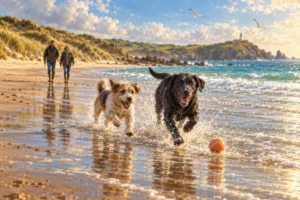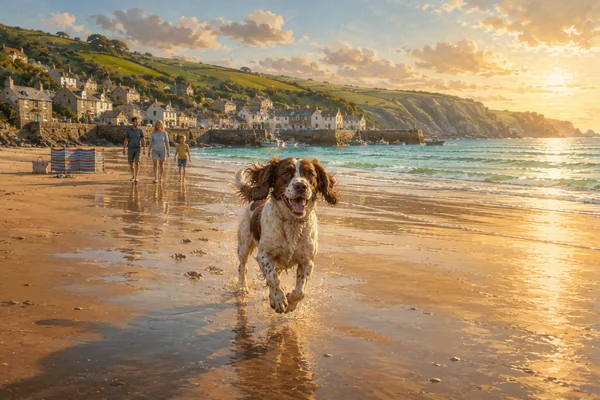
Quick answer: Cornwall is one of the most dog-friendly places in Britain — hundreds of beaches, most of the coast path, dozens of gardens and attractions, and pubs and cottages that expect a dog under the table. The one rule to know: many popular beaches ban dogs from 10am to 6pm in summer — most of them only in July and August — while others (Par Sands, Watergate Bay, Holywell Bay and Perranporth among them) welcome dogs all year. Beaches, walks, days out, stays and the practicalities — including cliffs, seals and adders — below.
Bring the dog. Cornwall wants you to — from the campsites and cottages that advertise “dogs welcome” before they mention the sea view, to the coast path that runs three hundred miles without a gate the dog can’t manage, to the beaches where a wet spaniel is part of the scenery. There are rules, and a few real hazards worth knowing, but the county is set up for four-legged visitors better than almost anywhere. This guide covers where dogs are welcome and when, the best dog days out, where to stay, and what to watch for.
Table of Contents
- Dog-friendly beaches, and the rules
- Walks and trails
- Dog-friendly attractions and days out
- Where to stay, eat and drink
- Keeping your dog safe in Cornwall
- FAQ
- References and resources
Dog-friendly beaches, and the rules
Cornwall Council’s dog restrictions are simpler than most people think: on the listed beaches dogs are banned only from 10am to 6pm — on most of them in July and August, and on the busiest Blue Flag and Seaside Award beaches from 15 May to 30 September. Outside those hours, and for the rest of the year, dogs are welcome, and plenty of beaches have no restrictions at all, including Watergate Bay, Fistral, Crantock, Holywell, Perranporth, Harlyn, Par Sands and Whitsand Bay. Our guide to dog-friendly beaches in Cornwall has the full beach-by-beach list.
Walks and trails
- The South West Coast Path — the whole Cornish length is dog-walkable; leads near cliff edges, livestock and seal haul-outs, and carry water in summer.
- The Camel Trail — 18 flat, traffic-free miles from Padstow through Wadebridge to Bodmin along the old railway; the classic dog-and-bike outing, with cafés on the way.
- Woodlands — Cardinham, Tehidy, Idless and Kilminorth welcome dogs freely; our woodland walks guide has dog notes for each — and shade on hot days.
- Bodmin Moor — open country and big skies; leads near ponies, sheep and cattle, and mind the adders on warm mornings.
Dog-friendly attractions and days out
- The great gardens — the Lost Gardens of Heligan, Trebah and Glendurgan welcome dogs on leads through the gardens (check each garden’s current policy on the day).
- National Trust estates — Lanhydrock, Trelissick, Cotehele and Godolphin all have dog-friendly parkland and woodland walks, and most NT cafés have a dog-friendly area.
- Ferries and boats — the King Harry and Fowey ferries and many wildlife boat trips take dogs; check when booking.
- Harbour towns — Padstow, Fowey, Looe, St Ives and Falmouth are all easy dog-town days: harbour walls, pubs, and (out of season) the beach.
- What’s not for dogs: the Eden Project’s biomes and most indoor attractions (assistance dogs excepted); many popular beaches in summer daytime, as above.
Where to stay, eat and drink
Cornwall’s holiday cottages are overwhelmingly dog-friendly — it’s a competitive advantage owners advertise — and the campsites even more so. Among hotels, Watergate Bay Hotel and a growing number of others actively welcome dogs; our guide to unusual places to stay flags dog policies where they matter. Pubs are the easy part: it’s a rarer Cornish pub that doesn’t allow dogs than one that does, and beach cafés almost universally have outside tables and a water bowl.
Keeping your dog safe in Cornwall
- Cliffs. The coast path runs close to unfenced edges; dogs go over every year chasing a scent or a gull. Leads on the cliff sections.
- Seals. Dogs on beaches and cliffs disturb hauled-out seals and can be bitten by them; leads near haul-outs, always — see our guide to Cornwall’s wildlife.
- Adders. Britain’s only venomous snake basks on moorland and heath in spring and summer; bites are rare but serious for dogs — keep to paths and know the nearest vet.
- Tides and rips. A dog that swims out after a ball on a surf beach can be in trouble fast; use the sheltered beaches for swimming.
- Heat. Sand burns paws and dogs overheat quickly; walk early and late in August, and carry water.
- Ticks — moorland and long grass; check after walks.
- Livestock — Cornish fields and moors are farmed; leads around sheep, cattle and moorland ponies without exception.
FAQ
Q: Are dogs allowed on Cornwall’s beaches?
A: On many beaches, yes all year; on the busiest ones, dogs are banned from 10am to 6pm, on most restricted beaches in July and August and on the busiest Blue Flag and Seaside Award beaches from 15 May to 30 September. Check Cornwall Council’s current list and the beach signs.
Q: Which Cornish beaches allow dogs all year?
A: Par Sands, Watergate Bay, Fistral, Harlyn, Holywell Bay, Crantock and Perranporth are among the reliable year-round dog beaches — but rules change, so confirm before you travel.
Q: Is the Eden Project dog-friendly?
A: Only assistance dogs are allowed in the biomes; check Eden’s current policy for the outdoor gardens before relying on it.
Q: Are there adders in Cornwall?
A: Yes, on moorland, heath and dunes, basking in spring and summer. Bites to dogs are rare but need a vet urgently; keep to paths in adder country.
Q: Can I take my dog on the Camel Trail?
A: Yes — it’s one of the best dog walks in Cornwall: flat, traffic-free and 18 miles long, with cafés along the way.
References and resources
- Cornwall Council — seasonal dog restrictions on beaches: www.cornwall.gov.uk
- South West Coast Path Association: www.southwestcoastpath.org.uk
- Camel Trail — Cornwall Council: www.cornwall.gov.uk
- Visit Cornwall — dog-friendly Cornwall: www.visitcornwall.com