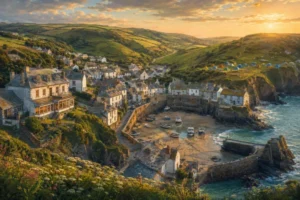
Quick answer: Cornwall’s most memorable places to stay are the ones nobody else has — lighthouse keepers’ cottages on the headlands, a castle on the Tamar, architect-designed cabins hidden in the cliffs at Tintagel, converted railway carriages, shepherd’s huts, treehouses and yurts in the fields, and campsites so far from anyone that the stars are the entertainment. Here’s a guide by type, who each suits, and how to book — with an honest note on what our own family’s “unique stay” looks like.
Cornwall has hotels, and some of them are very good — but the county’s genius is for the stay that becomes the story: the night you slept in a lighthouse, the week in a cabin you had to hike to, the castle where breakfast came with a moat. This guide gathers the genuinely unusual places to stay in Cornwall by kind — lighthouses and coastal cottages, castles and manors, cabins and huts, quirky conversions, and camping done properly — with a sense of who each is for and what to expect.
Table of Contents
- Lighthouses and coastal cottages
- Castles and manors
- Cabins, huts and treehouses
- Quirky conversions
- Camping, the Generation Cornwall way
- How to choose and book
- Personal insights and experiences
- FAQ
- References and resources
Lighthouses and coastal cottages
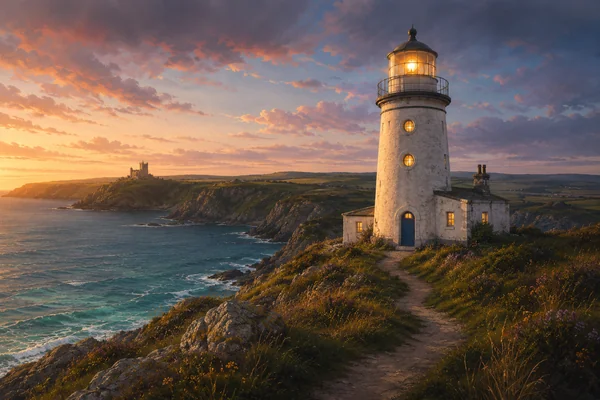
You can’t sleep in the light itself, but the keepers’ cottages beside several Cornish lighthouses are let as holiday homes — the classic being Trevose Head near Padstow and the cottages at the Lizard lighthouse, Britain’s most southerly. Expect wind, sea on three sides, and a view no hotel can match. The National Trust’s coastal cottages — at St Anthony Head on the Roseland, above the coves of the far west, in the harbour villages — are the wider version: old coastguard rows and clifftop houses in places you’d otherwise only walk past. Book a year ahead for summer; autumn and winter are cheaper and, for atmosphere, better.
Castles and manors
Pentillie Castle, on the Tamar near Saltash — our own corner — takes guests in a genuine castellated mansion with parkland running down to the river; it’s the county’s best-known castle stay. Cornwall’s country-house hotels do the manor version — Georgian and Victorian piles in gardens, some with spas — and the great estates let cottages in their grounds, which is the affordable way to sleep somewhere with a gatehouse.
Cabins, huts and treehouses
This is where Cornwall has got genuinely inventive in the last decade. Kudhva, near Tintagel, put architect-designed cabins on stilts in an old quarry above the sea and started a movement; treehouses, shepherd’s huts, yurts, safari tents and geodesic domes have followed on farms across the county, most with wood-fired hot tubs and a distinct absence of Wi-Fi. They suit couples and small families who want the outdoors without the tent — see our romantic getaways guide for the couples’ angle. Book direct or through the glamping specialists.
Quirky conversions
Sleep in a railway carriage on a working branch line (the restored carriages at St Germans station, on the main line just over the Tamar, are a delight — trains pass your window and you can be in Looe or Plymouth in minutes); in a converted chapel, an engine house, a Victorian signal box, a windmill or a round house. Cornwall’s building stock is old and odd, and its owners have imagination.
Camping, the Generation Cornwall way
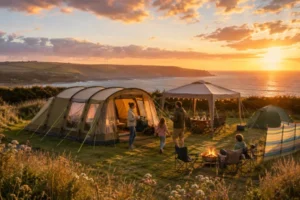
Some of the most unusual stays in Cornwall are the least expensive: a tent in a field above the sea, on a small farm site far enough from a road that the night is silent and the sky is enormous. The county is full of them — clifftop farm sites on the north coast, quiet fields inland, the big well-run family parks with pools and clubs. Sites like Lower Pennycrocker Farm, tucked above the coast between Boscastle and Bude, or the family park at Monkey Tree near Perranporth, are the two ends of our own camping spectrum — and both count, in our book, as unique stays. Our weather guide has the honest story of what a Cornish campsite can throw at a tent.
How to choose and book
- Match the stay to the trip: lighthouse cottage for a couple’s winter week; a cabin with a hot tub for a wet-season escape; a castle for the occasion; a family park for children who need other children; a farm field for the stars.
- Book absurdly early for the famous ones — the lighthouse cottages, Kudhva and the like are booked a year out for summer.
- Off-season is the secret: prices halve, the coast empties, and the atmospheric stays are more atmospheric in a storm. See what September offers.
- Check the dog policy — many of the best are dog-friendly, some are not; our dog-friendly guide covers the county.
- Where to look: the National Trust and Landmark Trust for the historic; the big cottage agencies and glamping specialists for the rest; the sites’ own pages for the small farms.
Personal insights and experiences
Honesty first: I’ve never slept in a lighthouse. Our family’s unique stay is a tent, and it always has been. Six children and later three generations under canvas is its own kind of unusual, and it has given us the two most memorable stays I can think of — a summer week at Lower Pennycrocker Farm under absolutely glorious skies with the site nearly to ourselves, and an autumn week on the same field when a gale flattened the neighbours’ tents and we spent most days inside ours, and still talk about it. Same field; two completely different holidays. That’s Cornwall.
So the guide above is research, honestly labelled — I’ve done the reading so you can do the sleeping. What I’d add from the tent is this: the stays we remember aren’t the ones with the best facilities, they’re the ones with the biggest sky. Choose accordingly.
FAQ
Q: Can you stay in a lighthouse in Cornwall?
A: In the keepers’ cottages beside several lighthouses, yes — Trevose Head near Padstow and the Lizard are the best known. Book far ahead for summer.
Q: Can you stay in a castle in Cornwall?
A: Pentillie Castle on the Tamar takes guests; several country-house hotels and estate cottages offer the manor experience.
Q: What are the most unusual places to stay in Cornwall?
A: Clifftop cabins at Kudhva near Tintagel, railway carriages at St Germans, lighthouse cottages, treehouses and shepherd’s huts on farms, and — cheapest and often best — a tent on a small farm site above the sea.
Q: When is the cheapest time for unique stays in Cornwall?
A: October to March, when prices can halve and the atmospheric stays are at their most atmospheric.
References and resources
- National Trust holiday cottages: www.nationaltrust.org.uk/holidays
- Landmark Trust — historic buildings to stay in: www.landmarktrust.org.uk
- Kudhva: kudhva.com
- Pentillie Castle: www.pentillie.co.uk
- Visit Cornwall — accommodation: www.visitcornwall.com