Quick answer: choose your area first, your accommodation second. The north coast (Newquay–Perranporth–St Agnes) is surf, big sands and family energy; the far north (Bude–Boscastle–Tintagel) is cliffs, legends and glorious remoteness; the far west (St Ives–Penzance) is art, light and the iconic sights; the south coast (Looe–Fowey–Falmouth–the Roseland) is calm water, harbours and gentler beaches; inland (Bodmin Moor and the Launceston gateway) is value, dark skies and reach in every direction. Cornwall is longer than it looks — pick the coast you’ll actually use, don’t plan to “do it all” from one base, and book school holidays far earlier than feels reasonable. The full decision guide — below.
The most common mistake in planning a Cornish holiday isn’t picking the wrong cottage — it’s picking the right cottage in the wrong place. Cornwall reads small on a map and drives big: the county is nearly eighty miles end to end on roads that were designed for carts, and in August a “quick trip across” can eat a morning (our reaching Cornwall guide covers getting here; this one is about where to stop). So this guide works the way locals think: area first, matched to the holiday you actually want — then the kind of roof, from farm campsite to spa hotel.
Table of Contents
- How to choose: the questions that decide it
- The north coast: Newquay to St Agnes
- The far north: Bude, Boscastle and Tintagel
- The far west: St Ives, Penzance and Land’s End
- The south coast: Looe to the Roseland
- Inland: Bodmin Moor and the Launceston gateway
- Types of stay
- When to book (and the September secret)
- Personal insights and experiences
- FAQ
- References and resources
How to choose: the questions that decide it
- Which sea do you want? The north coast is Atlantic: surf, drama, huge low-tide sands. The south is Channel: calmer, greener, better for small children and paddleboards.
- How far will you really drive on holiday? Be honest. If the answer is “twenty minutes”, your base decides your whole week.
- Who’s coming? Surfers and teenagers point north; toddlers and grandparents point south; couples point west or to the quiet coves; dogs come almost everywhere (check seasonal beach bans).
- One base or two? For a week, one. For a fortnight, splitting north and south (or east and far west) beats commuting across the county.
- Iconic sights or empty beaches? You can have either within ten minutes of the right base — rarely both.
The north coast: Newquay to St Agnes
The busiest, most energetic stretch: Fistral and Watergate’s surf, Perranporth’s vast beach with its warm braided stream, St Agnes’ mining-village charm. Base here for surf lessons, big family beach days and the widest choice of places to eat and stay — from holiday parks to the polished surf-scene hotels in our surf hotels guide. It’s also the best-served area for a family day out infrastructure-wise — zoo, aquarium and rainy-day options covered in our Newquay guide. Trade-off: August crowds, and the party end of Newquay is not everyone’s evening.
The far north: Bude, Boscastle and Tintagel
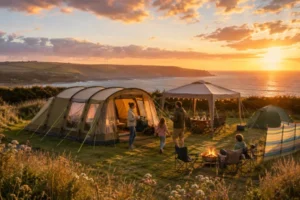
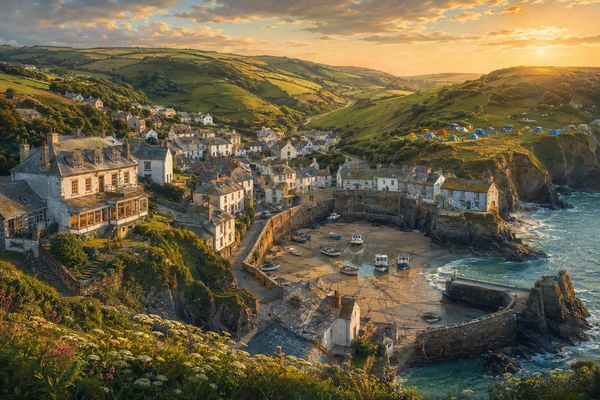
North of Padstow the coast empties and rises: serious cliffs, Arthurian Tintagel, the storybook harbour of Boscastle, and Bude’s family beaches at the top. Bases here are smaller — village inns, cottages, and clifftop farm campsites with views that five-star hotels can’t buy. This is the coast for walkers, storm-watchers and families who define a good day as a beach, a legend and a pasty rather than an itinerary. Trade-off: fewer wet-weather options and longer drives to the big attractions — which, if we’re honest, is half the point of staying here.
The far west: St Ives, Penzance and Land’s End
The end of the land, and it feels it: St Ives’ famous light and galleries, Penzance’s handsome working-town streets, Mousehole’s impossible prettiness, the Minack Theatre in its cliff, St Michael’s Mount across the sand, and the wild moors and coves of Penwith between them. Base here for the postcard Cornwall, art, and the sights everyone has heard of. It suits couples and photographers gloriously. Trade-offs: it’s the furthest area from the A30’s entry point — build the drive into day one — and St Ives in August is a masterclass in narrow-street patience.
The south coast: Looe to the Roseland
Cornwall’s gentler face: working harbours (Looe, Mevagissey), yachty elegance (Fowey, Falmouth, St Mawes), subtropical gardens, creeks and the sheltered family-friendly beaches the north can’t offer. The water is calmer, the villages greener, the pace slower — this is where you base a holiday built around small children, crabbing lines, garden visits and long harbourside lunches, and it holds most of the county’s romantic boltholes too. Trade-off: no surf, smaller beaches, and midsummer parking in the pretty villages is a competitive sport.
Inland: Bodmin Moor and the Launceston gateway
The area everyone drives through and almost nobody considers — wrongly. Inland Cornwall means moorland walks and dark-sky stargazing on Bodmin Moor, honest market towns (Launceston with its castle, Bodmin, Liskeard), farm stays with real farms attached, and prices a coastal postcode can’t match. Strategically it’s clever: from the Launceston area you can reach the north coast, the south coast and the moor inside forty minutes each, which makes it the best two-centre-holiday-without-moving base in Cornwall. Trade-off: you’ll drive to every beach — but you’d be surprised how quickly, and you’ll park more easily than the people who paid double to sleep nearer.
Types of stay
- Cottages — Cornwall’s default: the big agencies list thousands, the best coastal ones for school holidays go up to a year ahead, and inland/off-season the value improves dramatically.
- Hotels — from surf-scene spa hotels to harbour-town classics; see our spa and wellness guide for the pamper end.
- Holiday parks — the all-facilities family answer, strongest on the north coast.
- Camping and glamping — the cheapest way to the best locations in the county; our camping guide is the honest version, gales included.
- The genuinely different — lighthouses, castles, huts and towers: our unique stays guide collects them.
When to book (and the September secret)
School summer holidays: book by winter, pay the year’s top prices, and accept that the famous places are shared. Half-terms and Easter: months ahead. But if your dates are flexible, the calendar is your biggest discount — September brings the warmest sea of the year, thinner crowds and softer prices the week the schools go back, and even October half-term costs meaningfully less than August for a wilder, emptier Cornwall. Whatever the month, our weather guide tells you what you’re actually booking into.
Personal insights and experiences
Our family’s Cornish bases have always been the two kinds money barely touches: a tent, or family. The tent has given us the north in both its moods — a clifftop field at Lower Pennycrocker Farm above the Boscastle coast, where we’ve camped under postcard-perfect summer skies and through an October gale that flattened the neighbours, and the Perranporth–Newquay belt, where a big holiday-park pitch put the zoo, the beach and the rock pools all inside twenty minutes. Family gives us the Launceston gateway — my parents live there, and staying inland has taught me the case I made for it above: you reach everything, you park everywhere, and you come home through farm lanes instead of traffic. And the south coast I know as a visitor with a boot full of crabbing kit: Par Sands was my own childhood holiday beach, and Looe is where Lisa and I take the family for harbour days now. Cottages and hotels I’ll review the day we try them — for now, canvas and kin have shown us more of Cornwall than most brochures cover.
FAQ
Q: Where is the best place to stay in Cornwall for a first visit?
A: For the classic all-rounder, the north coast around Newquay–Perranporth: big beaches, surf, family infrastructure and central-ish reach. For icons and art, base in the far west instead and accept the longer arrival drive.
Q: Where should families with young children stay?
A: The south coast (Looe, Fowey, the Roseland) for calm, sheltered water — or a north-coast holiday park if the family wants surf and clubs. Porth and the town beaches suit small children on the north side.
Q: North coast or south coast?
A: North for surf, drama and big sands; south for calm water, harbours and gardens. They’re forty minutes apart in most places — but pick the one you’ll wake up wanting, because holiday inertia is real.
Q: Can you do Cornwall from one base?
A: A week, yes — if you choose the right area and accept one or two longer day trips. For a fortnight, two bases (or one clever inland one near Launceston or the A30 spine) beat daily cross-county drives.
Q: When should I book accommodation for Cornwall?
A: School summer holidays: by the preceding winter. Easter and half-terms: several months out. Off-season and September: weeks is usually fine, and the prices reward the flexible.
References and resources
- Visit Cornwall — official tourist board and area guides: www.visitcornwall.com
- National Trust — holiday cottages in Cornwall: www.nationaltrust.org.uk/holidays
- Transport for Cornwall — buses and getting around: www.transportforcornwall.co.uk
- Cornwall Council — seasonal dog beach restrictions: www.cornwall.gov.uk