Quick answer: rewilding in Cornwall ranges from the landmark — beavers back on a Cornish river after 400 years, choughs back on the cliffs after 30 — to the tiny: a pond in a back garden that fills with life within weeks of being dug — and now Cornwall’s ancient rainforest fragments anchor the county’s biggest restoration story yet. This guide covers the county’s big rewilding stories, how the same idea works at garden scale, and exactly what turned up when we built our own wildlife pond and let a lawn become a meadow. With photos.
Rewilding is one of those words that sounds like it needs a thousand acres and a herd of something. It doesn’t. At heart it means stepping back and letting natural processes do more of the work — and Cornwall, with its ancient hedges, wild moors, warm wet climate and a landscape that never fully surrendered to intensive farming, is one of the best places in Britain to watch it happen at every scale. Some of it is headline-grabbing. Some of it is a bucket of pond water and a lot of patience. I’ve done the second kind, more than once, and it remains one of the most rewarding things I’ve ever built. Our Cornish hedges guide explains what they actually are and why the craft is endangered.
Table of Contents
- What rewilding actually means
- Cornwall’s rewilding stories
- Rewilding at garden scale, Cornish style
- Our wildlife pond: a photo diary
- Who moves in, and when
- Personal insights and experiences
- How to help rewilding in Cornwall
- FAQ
- References and resources
What rewilding actually means
Conservation traditionally manages nature toward a target: this species, that habitat, kept just so. Rewilding takes a step back and restores the processes — grazing, flooding, dead wood, wetland, the messy edges — then lets nature decide the outcome. It runs from the vast (reintroducing beavers to rebuild river systems) to the domestic (not mowing, digging a pond, leaving the log pile). The unifying idea is humility: nature is better at this than we are, if we give it room. It is not the same as neglect — the good stuff needs a nudge to start and a light hand thereafter.
Cornwall’s rewilding stories
Beavers on a Cornish river
In 2017 the Cornwall Beaver Project, run by Cornwall Wildlife Trust with a farmer at Woodland Valley Farm near Ladock, brought beavers back to Cornwall for the first time in around four centuries. Within an enclosed stretch of stream they did what beavers do — built dams, made pools, slowed the water — and the science that followed showed the pools holding back flood peaks and filtering the water for the village downstream. Kits have been born there since. It is the clearest demonstration in the county that one animal, given room, rebuilds a whole landscape — and it points at the bigger prize: rivers and streams that have spent two centuries straightened into drainage channels being allowed to meander again, spill onto their floodplains, and hold water in the land instead of rushing it to the sea. Nothing in rewilding produces abundance faster than slow water. If you can, book a visit to the beaver site through the Trust; seeing the pools they’ve made changes how you look at every stream afterwards.
The chough comes home
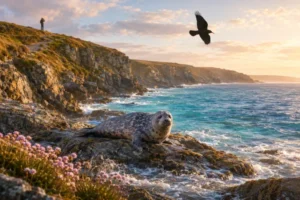
The red-billed chough is on Cornwall’s coat of arms and, for three decades, wasn’t in Cornwall at all. Then in 2001 a pair turned up on the Lizard, unaided, and bred. Careful protection and — crucially — the return of grazing to the clifftops, which keeps the short turf choughs feed on, has let them spread along the coast ever since. Watching one tumble in the wind above a headland is the best kind of proof that a landscape can heal. Our guide to Cornwall’s wildlife conservation has more on the choughs and the seals.
Pine martens: the next return?
In March 2026 a camera trap inside the beaver enclosure on the Trewithen Estate, near Truro, caught something nobody expected. Kernow Conservation had set it to monitor the water voles released there the year before, and it recorded a pine marten, a species all but absent from Cornwall for over a century. Whether it was passing through or has settled is still unknown. But it didn’t come from nowhere. Since 2024 the Two Moors Pine Marten Project has released martens on Dartmoor and Exmoor, and kits have now been born on both moors, one river away from Cornwall.
The marten matters for more than its own return. Studies in Scotland and Ireland found that where martens come back, grey squirrels decline and red squirrels recover. Reds evolved alongside martens and know to fear them. Greys, American imports, don’t, and they make the easier meal. Cornwall has had no red squirrels for more than 30 years, and the Cornwall Squirrel Project hopes to bring them back.
It isn’t a silver bullet. Martens need large, connected woodland, breed slowly and avoid towns, so greys keep their urban strongholds. Not everyone welcomes a predator that also takes eggs and chicks. And Cornwall has little woodland to offer them, which is why restoring woods like the temperate rainforest on Bodmin Moor matters to this story. Give the marten a forest and it does the rest.
Moors, hedges and verges
Cornwall Wildlife Trust’s reserves — Helman Tor near Bodmin, its largest, is a fine example — are letting wetland and heath knit back together across the mid-Cornwall moors. The county’s roughly 30,000 miles of Cornish hedges, some of them thousands of years old, are already one of the great accidental rewilding assets of Britain: stone-and-earth banks so thick with life they function as linear nature reserves. And along the roads, councils and parishes are increasingly letting verges grow, mow late and seed wildflowers — which is why a Cornish lane in June can look the way the whole countryside once did, before Britain lost some 97% of its wildflower meadows.
Rewilding at garden scale, Cornish style
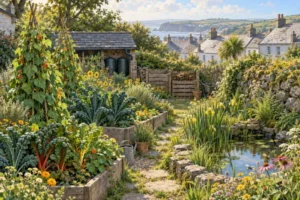
- Dig a pond. Nothing — genuinely nothing — brings life to a garden faster. It doesn’t need to be big; it needs a shallow, gently sloping edge so things can get in and out, and no fish.
- Let a patch of lawn go — and use yellow rattle. Scalp the grass, scatter yellow rattle seed (it’s semi-parasitic on grass and weakens it, which is what gives wildflowers their chance), add a native wildflower mix, then cut once in late summer and let it seed. The first year is scruffy. The second year is a meadow.
- Leave the dead wood. A log pile, or logs used as pond edging, is a hotel for beetles, fungi, and the newts that overwinter in them.
- Plant a Cornish hedge, or thicken the one you have — hawthorn, blackthorn, hazel, holly. Birds, bees and shelter for the whole garden.
- Put the sprays away. The food chain in a wild garden starts with the things you were killing.
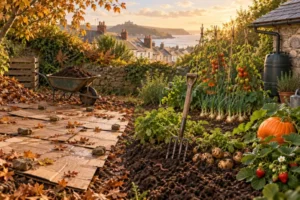
Want the garden to feed you as well as the wildlife? Our guide to permaculture in Cornwall covers the growing side — living soil, captured rain and plants that do several jobs at once.
Our wildlife pond: a photo diary
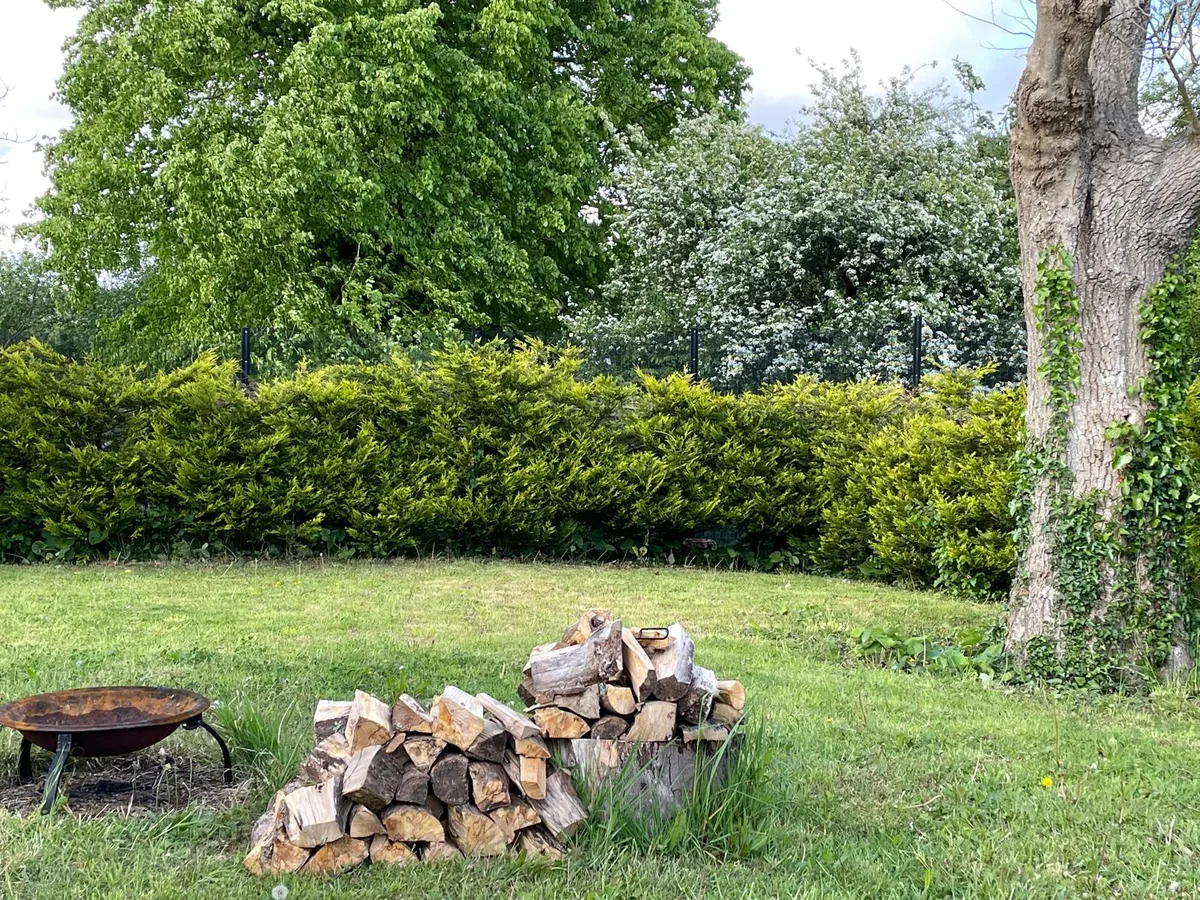
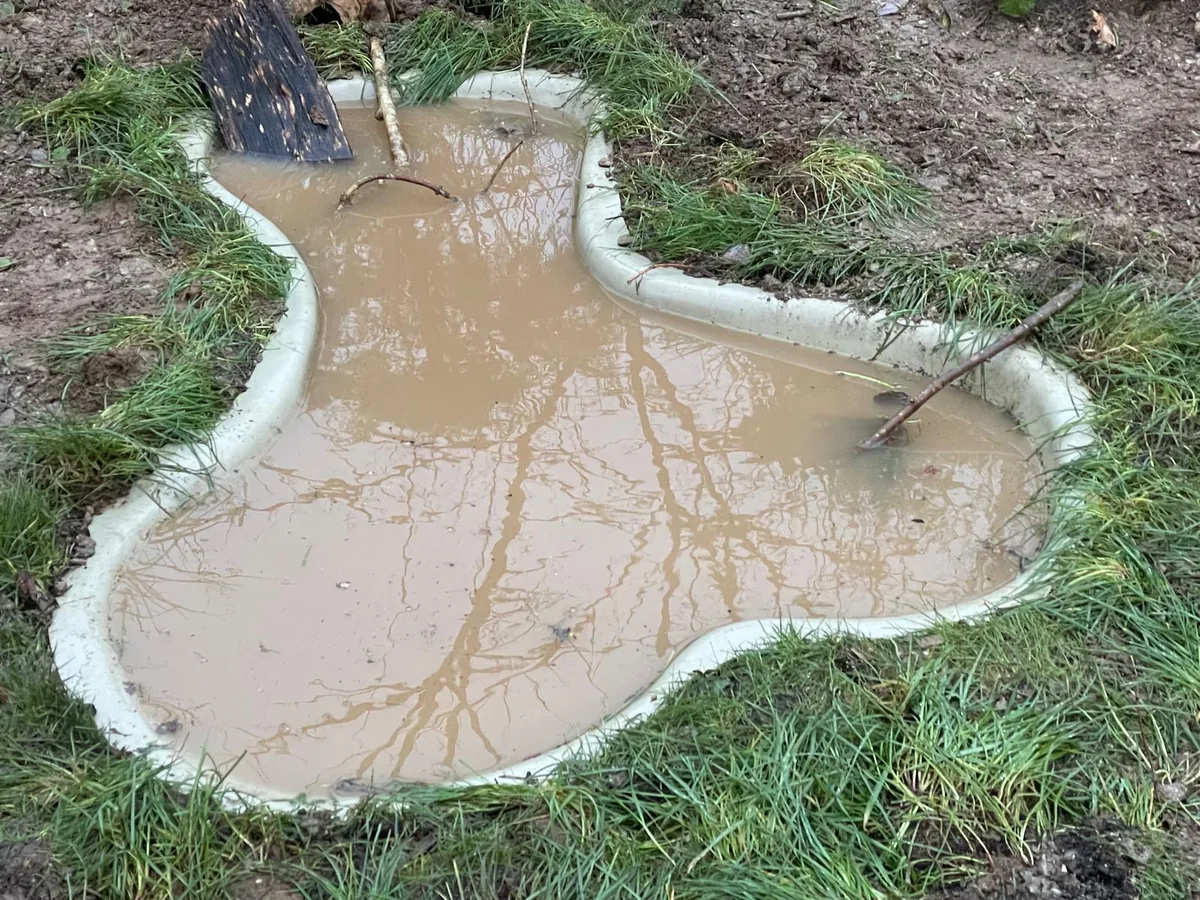
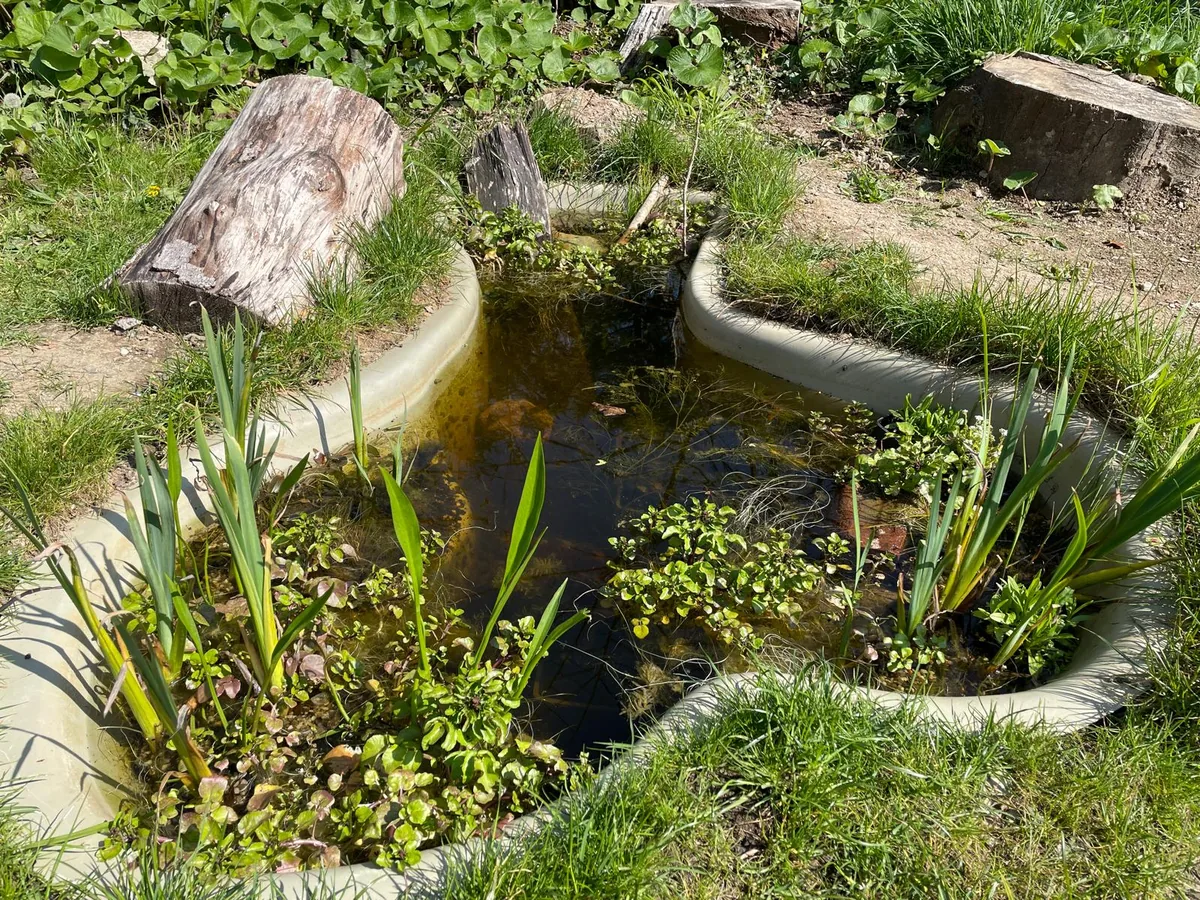
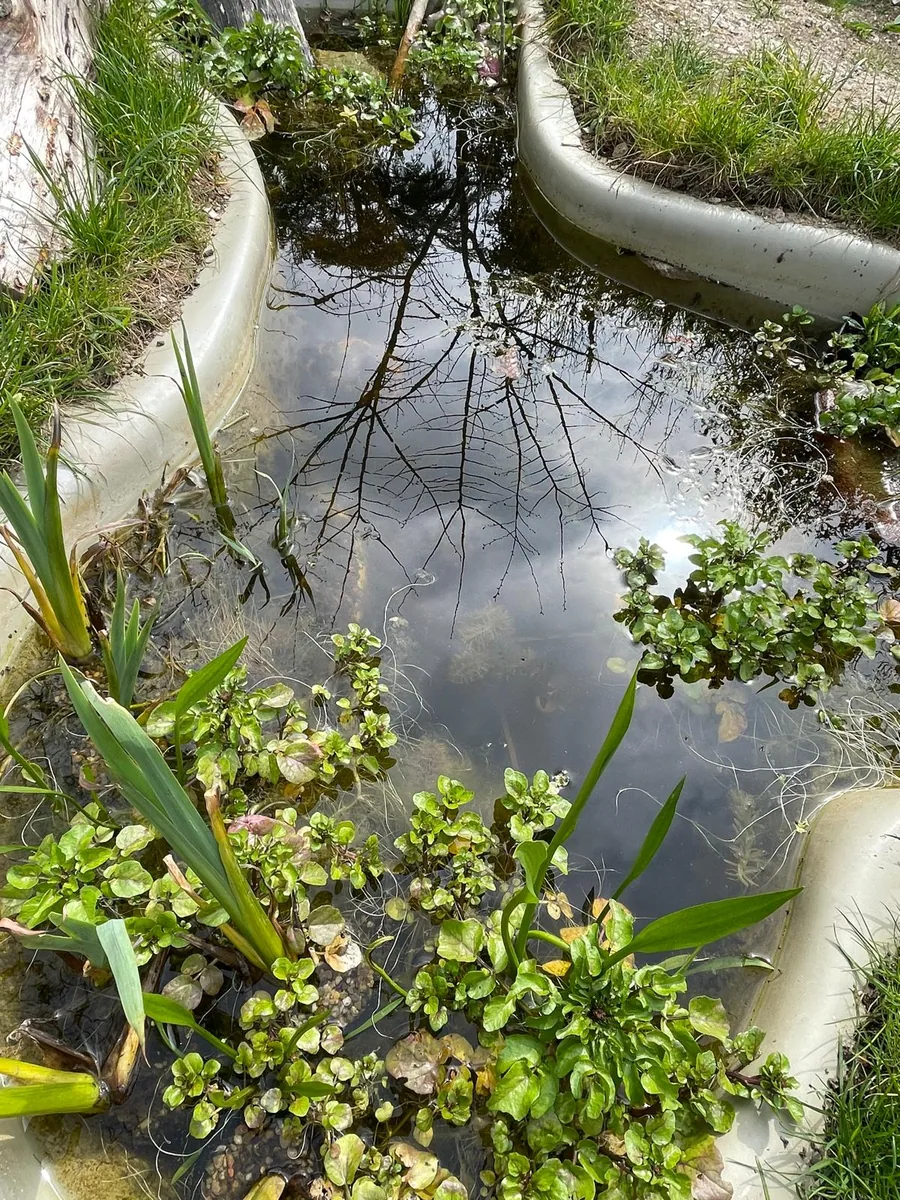
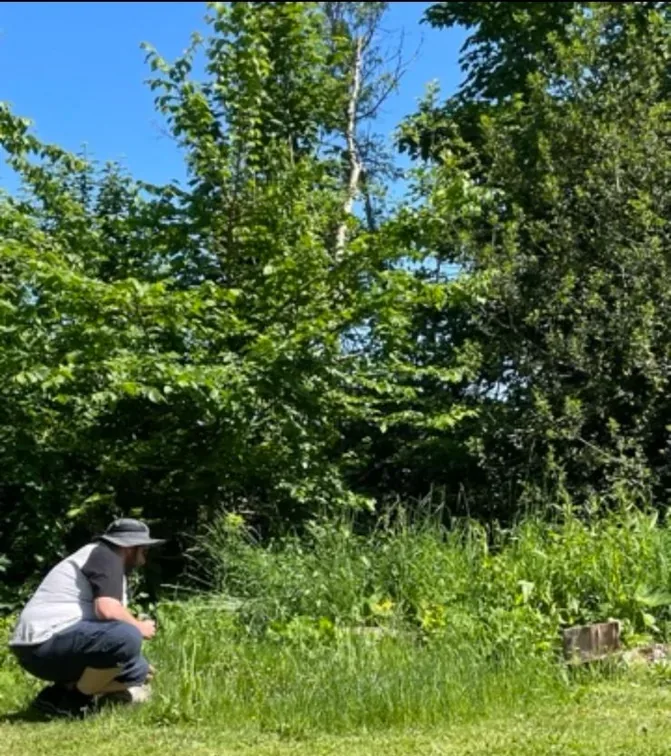
Our old house had a very large garden on the edge of a big woodland, ringed by tall trees, and over the years it became my rewilding project: a meadow where the lawn had been, and, at the heart of it, a wildlife pond — the most recent of several I’ve built, and the one I photographed from the first day. This is what a pond does in one summer.
Who moves in, and when
Nobody delivers pond life; it simply arrives — on birds’ feet, on the wind, on the plants you put in — and it arrives in a fairly reliable order.
The daphnia come first, and they are my favourite residents by a distance. Water fleas: tiny translucent crustaceans that appear from nowhere within a couple of weeks, feed on the algae, and clear the water for everything that follows. Watch a healthy population in sunlight and something remarkable happens — with enough of them, they seem to organise into lanes of travel, streams of traffic moving in ordered layers through the water. It reminds me every time of the sky over Coruscant in the Star Wars films. I can lose half an hour to it.
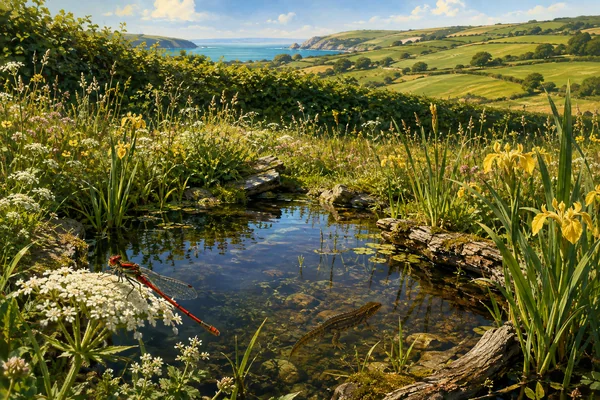
Then the insects: pond skaters and water boatmen on and under the surface within days, and in spring the large red damselflies — the first damselfly to emerge each year, and the most reliable early visitor to any new garden pond.
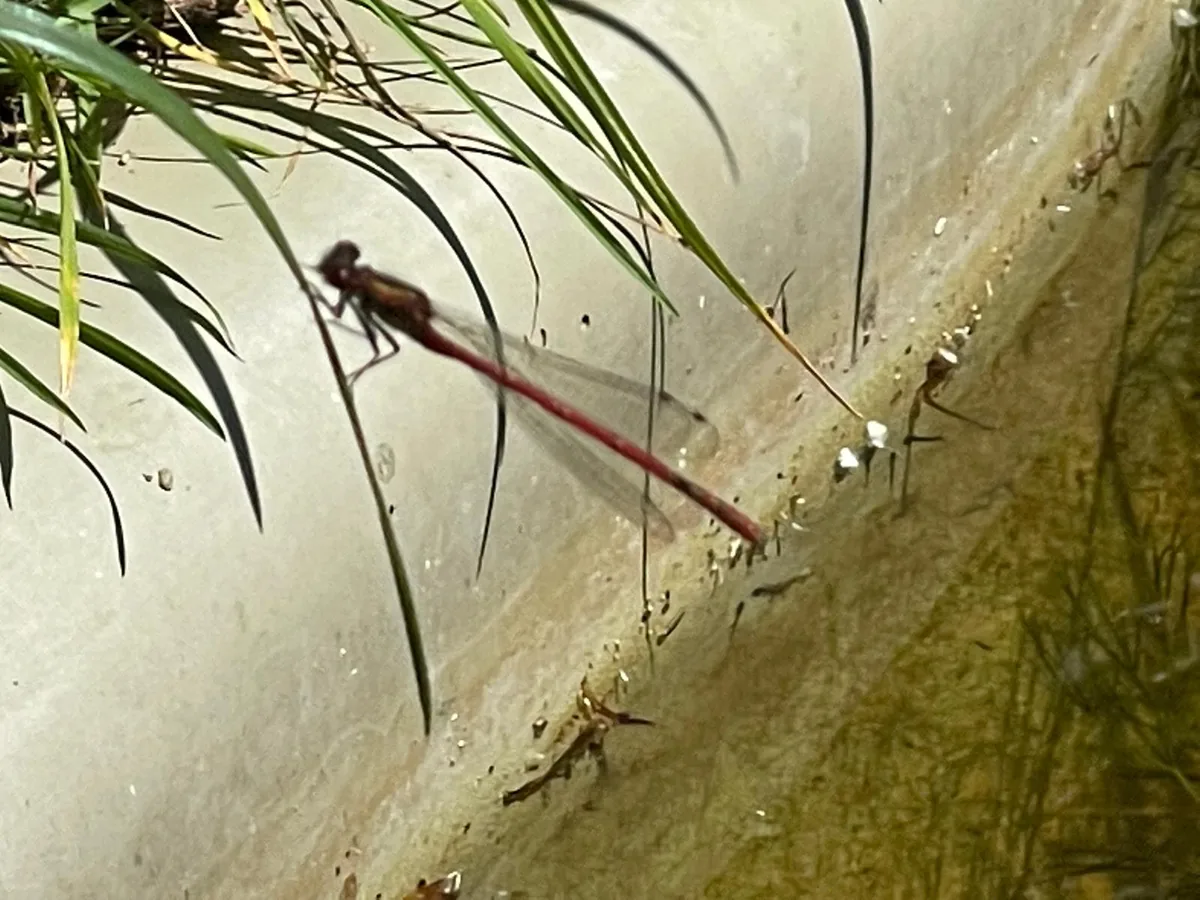
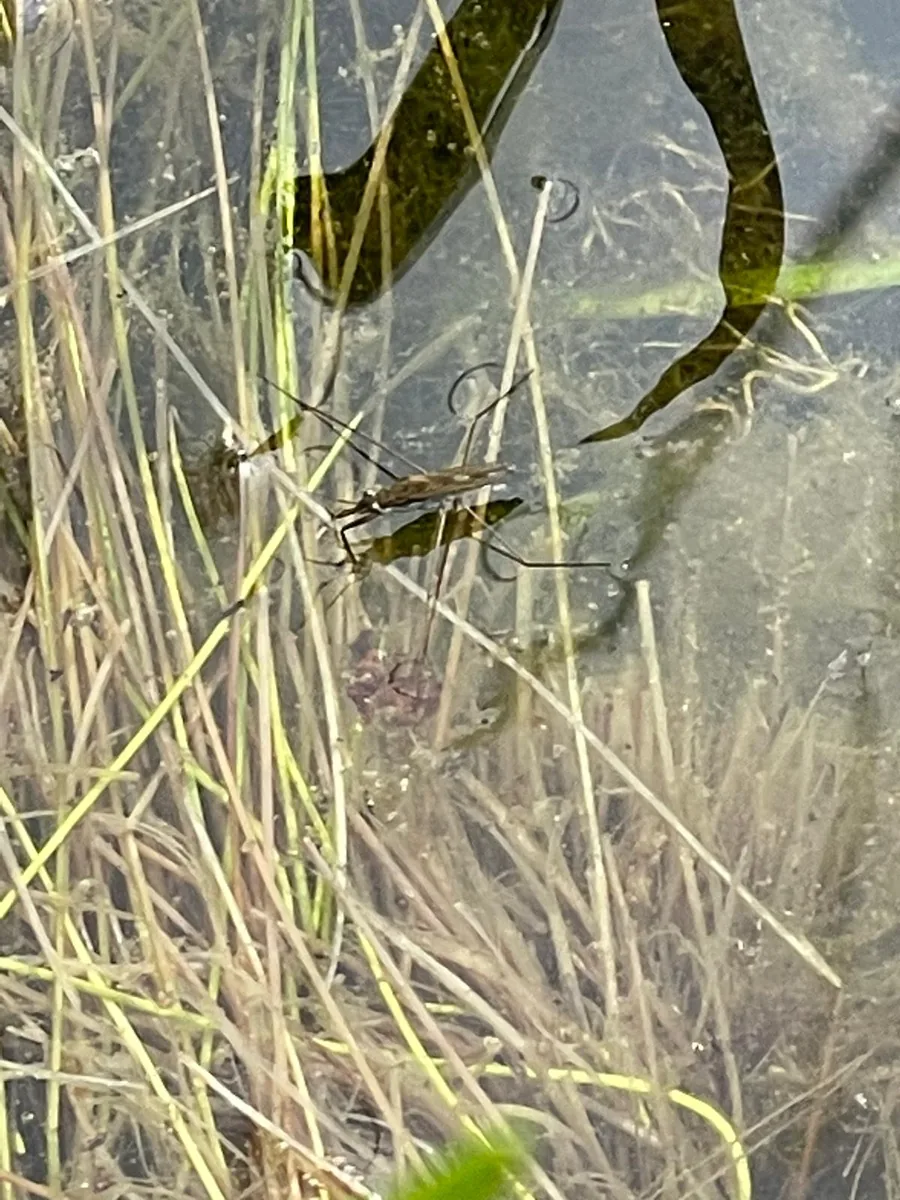
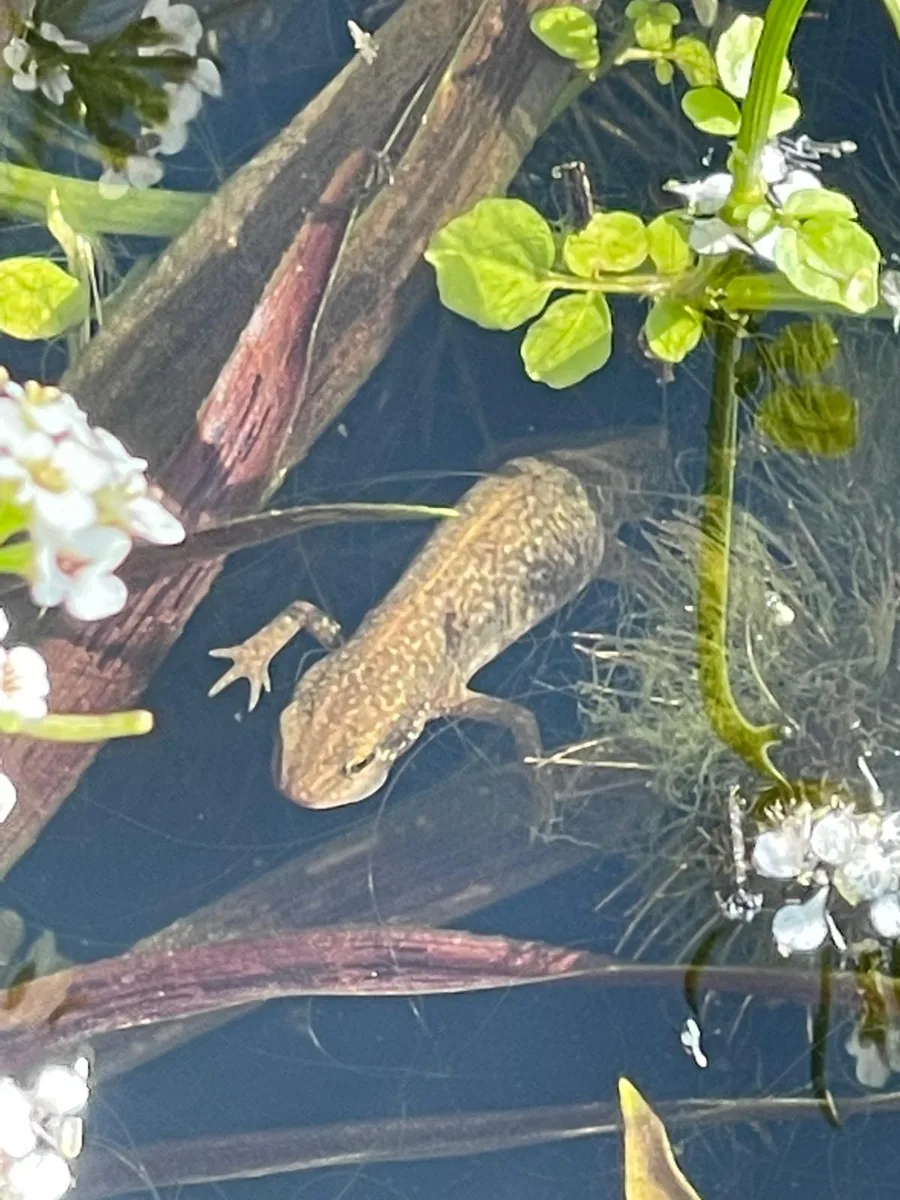
Then the underwater crowd: water beetles of several kinds, and larvae you’ll want a book for — the rat-tailed hoverfly larvae with their snorkels were a favourite. Then the amphibians. Newts found the pond in its first year — in Cornwall’s soft, slightly acidic water it’s usually palmate newts, though smooth newts turn up too and they’re hard to tell apart. Frogs and toads follow where there’s cover; a log pile nearby is the invitation. And the moment I was most excited by wasn’t an animal at all but its leftovers: a dragonfly exuvia clinging to a rush stem — the empty shell of the nymph that had climbed out of my pond, split down the back, and flown. Once there’s a pond, the birds come to drink and bathe too, and the whole garden’s population goes up a gear.
Personal insights and experiences
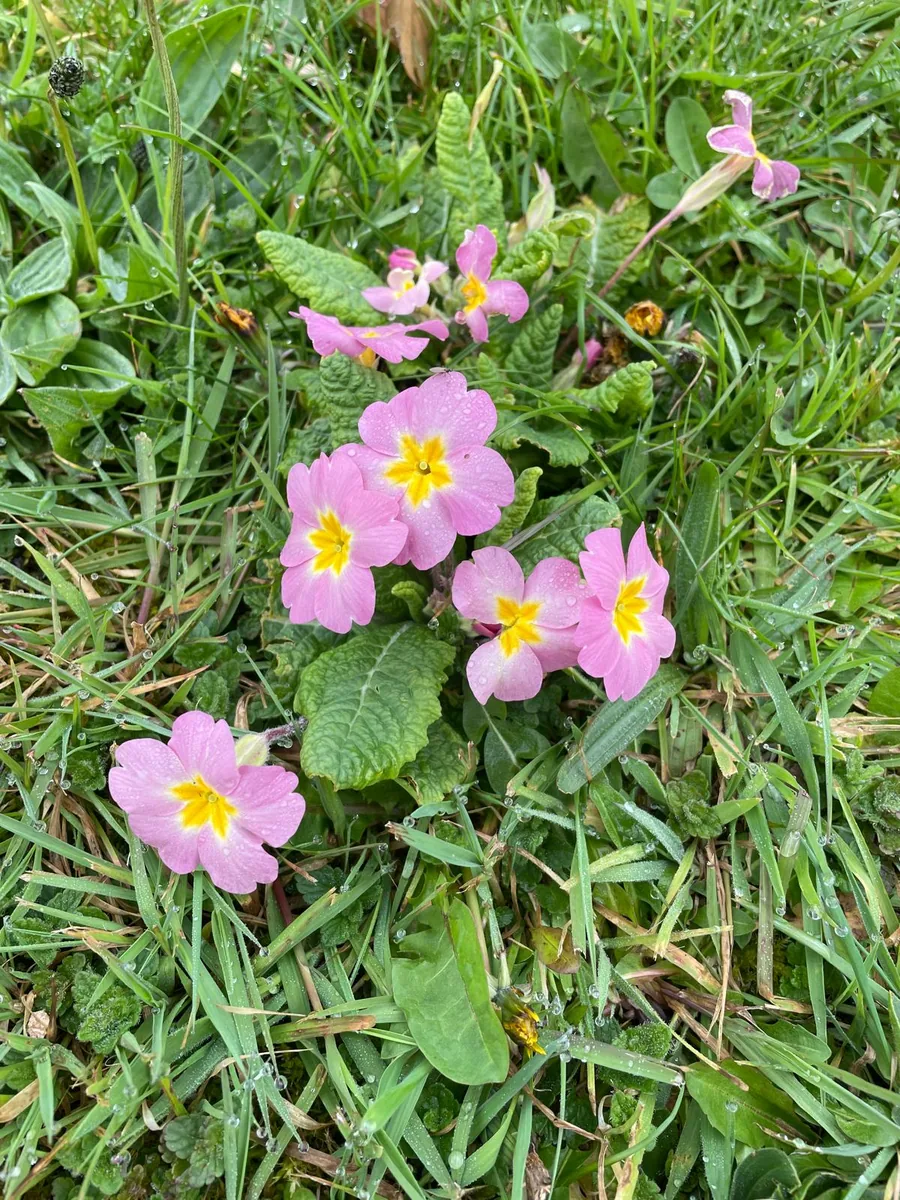
The meadow at the old house was a three-year project and it taught me the order of operations. First I scattered yellow rattle around the borders and let it drift inward organically — no straight edges — because rattle weakens the grass and gives you ground to work with. Then I mowed the existing lawn aggressively, right down to the soil, and spread a lot of large wildflower “bomb” packs. The following year we had the beginnings of a meadow, so I let everything grow, grass included, to let the flowers set seed — then cut it. The year after that we had a genuine wild meadow garden. It also had a genuine problem: giant hogweed, a few plants originally, now spreading, and with three generations under one roof and grandchildren in the garden I couldn’t risk anyone getting burned. So I dug them out on sight, every time. Rewilding isn’t hands-off; it’s knowing which hands-on jobs still matter.
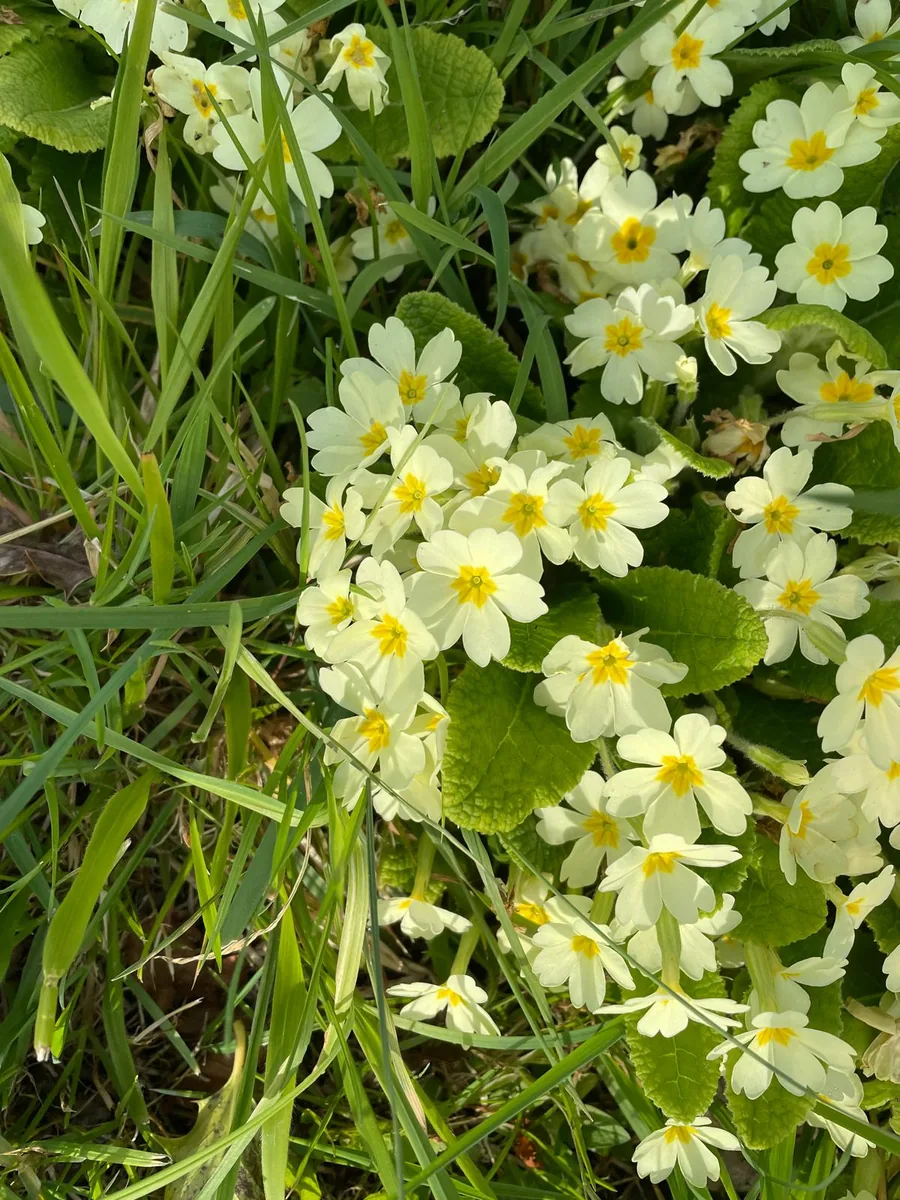
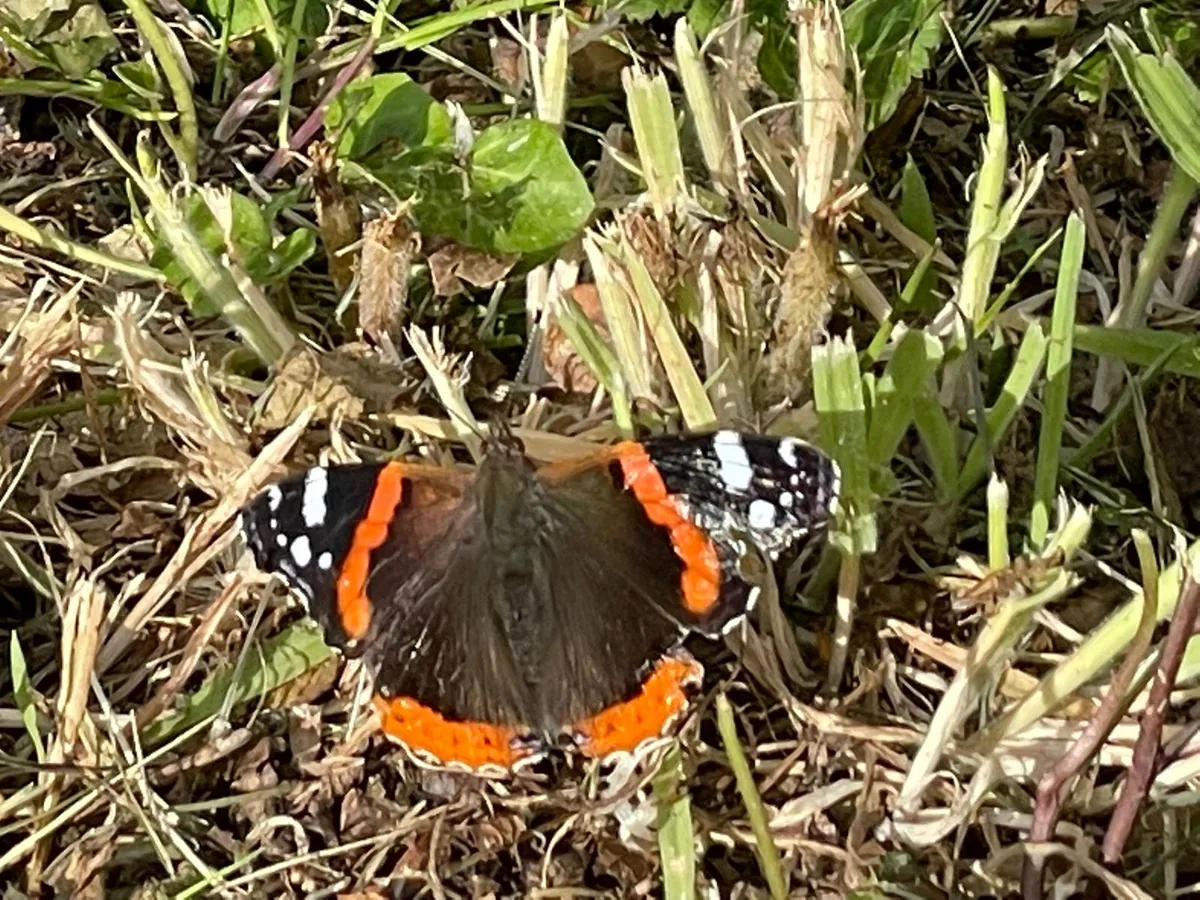
I’m a technologist by trade, and I think that’s exactly why I find ponds so satisfying: you set up the conditions and a system you didn’t design assembles itself in front of you, more elegantly than anything you could have planned. Every pond I’ve built has followed the same arc — the embarrassing puddle, the fortnight of doubt, then the daphnia, and after that it stops being something you made and becomes somewhere things live. I loved that garden.
Our current house is rented, and it used to be student accommodation. The garden, when we arrived, was gravel — and under the gravel, several layers of weed membrane, and under that, utterly grey, dead, compacted stuff that only technically qualified as soil. With permission I took the lot up. It has taken three years of natural feeding to turn that into a living ecology, and two more before any grass I sowed would survive a winter — but it has come together now, fantastically. If a rented ex-student garden can come back from that, honestly, anywhere can. That’s the argument for rewilding in one plot: give the land back a little, and it gives back a lot.
How to help rewilding in Cornwall
- Join Cornwall Wildlife Trust — membership funds the beavers, the reserves and the marine work directly.
- Visit the wilder places — the Trust’s reserves, the moors, and the ancient woodlands; a walk through them is good for you and good for the case that they matter.
- Build a pond. If every garden in Cornwall had one, the county would have a wetland network no reserve could match.
- Skip the mow in May, leave the log pile, lose the sprays.
- Record what you see — a newt, a chough, a damselfly logged with the local records centre helps map the recovery.
FAQ
Q: What is rewilding?
A: Restoring natural processes — grazing, wetland, dead wood, free-flowing water — and letting nature shape the result, rather than managing toward a fixed target. It works at every scale from river catchments to back gardens.
Q: Are there beavers in Cornwall?
A: Yes — the Cornwall Beaver Project near Ladock returned beavers to Cornwall in 2017 for the first time in around 400 years, and they’ve bred there since.
Q: Are there pine martens in Cornwall?
A: Only just. A pine marten was recorded on a camera trap on the Trewithen Estate near Truro in March 2026, and martens reintroduced to Dartmoor and Exmoor since 2024 are breeding. There is no established Cornish population yet.
Q: How do I start rewilding a garden?
A: Dig a pond with a shallow edge and no fish, stop mowing a patch (or seed it with native wildflowers and cut once in late summer), leave dead wood, and stop using sprays. Then wait — the second year is where it comes good.
Q: What will move into a new pond?
A: Daphnia (water fleas) within weeks, then pond skaters and water boatmen, damselflies in spring, and newts and frogs within the first year or two — none of them introduced, all of them arriving on their own.
Q: Do I need a big garden for a wildlife pond?
A: No. A sunk container or small preformed shell works; a shallow, sloping edge matters far more than size.
Q: Isn’t rewilding just letting a garden go to ruin?
A: No — it’s a light hand, not no hand: a pond needs building, a meadow needs a late-summer cut, invasive arrivals like giant hogweed still need dealing with. After that, nature does the work.
References and resources
- Cornwall Wildlife Trust — reserves and the Cornwall Beaver Project: www.cornwallwildlifetrust.org.uk
- Freshwater Habitats Trust — how to build a wildlife pond: freshwaterhabitats.org.uk
- Plantlife — meadows and No Mow May: www.plantlife.org.uk
- Rewilding Britain: www.rewildingbritain.org.uk
- Two Moors Pine Marten Project — the Dartmoor and Exmoor releases: twomoorspinemartens.org
- Cornwall Squirrel Project — grey squirrel control and the red squirrel ambition: redsquirrelsouthwest.org.uk
- BirdGuides — the Trewithen pine marten record, March 2026: birdguides.com