Quick answer: walking is one of the simplest, best-evidenced ways to lift mood and clear the mind — and Cornwall may be the finest place in Britain to do it. Below: five walks chosen for how they make you feel rather than how far they go, plus how to turn any walk into a restorative one.
There’s a particular kind of tired that no amount of sleep fixes — the screen-lit, notification-fed kind that builds up over a working week. The reliable antidote, in our family’s experience, has never been complicated: boots on, door shut, and an hour somewhere the horizon is bigger than a monitor. Cornwall is extravagantly supplied with such places. This guide gathers walks chosen not for distance or difficulty but for what they do to your state of mind — sea air, running water, big skies and old stones — along with simple ways to make any walk more restorative.
Table of Contents
- Why walking works
- The walks
- Making any walk therapeutic
- Personal insights and experiences
- FAQ
- References and resources
Why walking works
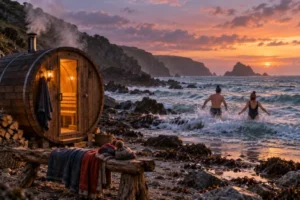
The research keeps agreeing with what walkers already know: regular walking supports mood, sleep and stress recovery, and doing it in natural surroundings — especially near water, what researchers call “blue space” — appears to amplify the effect. Mental health charities like Mind actively promote ecotherapy for good reason. None of this requires Lycra, targets or apps. It requires a path, and Cornwall has about three hundred miles of the best ones in Britain, including its share of the South West Coast Path. It pairs beautifully with that other great Cornish wellbeing tradition — cold water swimming — for a full restorative day.
The walks
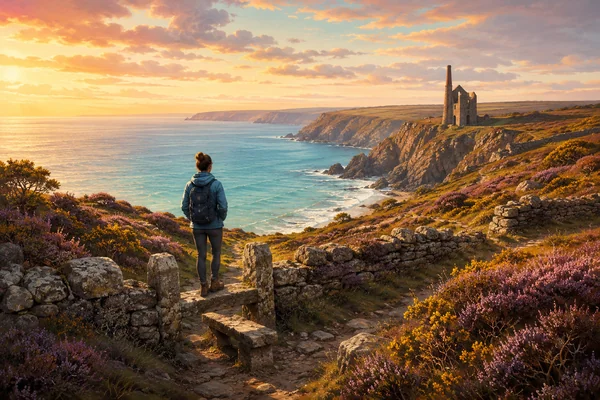
Chapel Porth to St Agnes Head — the head-clearer
Clifftop heather, ruined engine houses, and the Atlantic doing its enormous thing far below. This short stretch of coast path packs in everything that makes coastal walking so effective: rhythm, sea air, and views that make whatever you were worrying about feel appropriately small. The famous silhouette of Wheal Coates engine house is the turnaround point.
Golitha Falls — the forest bath
An easy, mostly level trail through ancient oak woodland beside the tumbling River Fowey on the edge of Bodmin Moor. Moss, birdsong and white water — the Japanese call this kind of thing forest bathing; Cornwall has been doing it quietly for centuries. One of several magical woodland walks the county keeps half-secret.
The Helford River — the slow one
Creekside paths through oak trees that lean right down to the water, hidden quays, and barely a contour line all day. The Helford is Cornwall at its gentlest — this is the walk for conversations, or for the kind of silence you can only share with someone you know well.
Rough Tor, Bodmin Moor — the perspective machine
A short, honest climb to a summit of stacked granite with views across half of Cornwall. The moor strips things back: wind, stone, sky, and Bronze Age remains underfoot to remind you that people have been coming up here to think for four thousand years. Save it for a clear day and take a layer more than you think you need.
Mousehole to Lamorna — the reward walk
A beautiful, occasionally rugged stretch of the coast path between two of Cornwall’s loveliest small harbours, with a cove café at the far end and the option of returning by the same path or the quiet inland lanes. Finishing a walk in a fishing village with an ice cream or a proper cream tea is a wellness strategy we can wholeheartedly endorse.
Making any walk therapeutic
- Leave the podcast at home occasionally. The soundtrack of a Cornish walk — waves, wind, buzzards — is doing more work than it gets credit for.
- Walk at talking pace, not training pace. The aim is to arrive back lighter, not faster.
- Notice five things. The old mindfulness trick works: a colour, a sound, a smell, a texture, a shape. Cornwall makes it easy.
- Check the tide and the weather first — an unplanned soaking is only character-building in retrospect.
- Make it a habit, not an event. A short walk repeated weekly beats an epic one performed annually.
Personal insights and experiences
I spend my working life in front of screens, and I’ve learned to treat walking as the counterweight — the thing that puts the day back in proportion. The walks that work best for me are the ones with water in them: the coast path when I want to feel small in the good way, and the wooded river valleys when I want the world to be quiet and green and close.
What I’d tell anyone starting: don’t wait for the perfect day. Some of our most memorable family walks happened in weather the forecast tried to talk us out of — waterproofs on, heads down into the wind, and home an hour later feeling like different people. Cornwall doesn’t require you to be an athlete or an early riser. It just asks you to come outside.
FAQ
Q: Do I need to be fit to enjoy these walks?
A: No — Golitha Falls and the Helford are gentle and mostly level, and every walk here can be shortened. Walk at the pace that lets you enjoy it.
Q: What’s the best time of year for wellbeing walks in Cornwall?
A: All of them, genuinely — spring flowers, summer evenings, dramatic autumn seas and crisp winter light each have their own effect. Quieter seasons often feel the most restorative.
Q: Are these walks suitable for dogs?
A: Mostly yes, with normal care around livestock and cliff edges — check individual locations for seasonal rules.
Q: Is walking really good for mental health?
A: Regular walking, especially in natural settings, is consistently associated with improved mood and reduced stress, and is promoted by mental health charities such as Mind. It complements rather than replaces professional support where that’s needed.
References and resources
- South West Coast Path: www.southwestcoastpath.org.uk
- Mind — nature and mental health: www.mind.org.uk
- iWalk Cornwall — route guides: www.iwalkcornwall.co.uk
- Cornwall Wildlife Trust: www.cornwallwildlifetrust.org.uk