Quick answer: yes, you can ride horses on Cornish beaches — and it’s one of the great things to do here. Perranporth, Gwithian and Hayle Towans, Watergate Bay and Holywell Bay are the classic rides, most easily done through a local stables that runs escorted beach rides (book well ahead, especially in summer). Rides run at low tide on firm sand, often early morning or out of season when beach byelaws allow. Beginners are welcome at most stables. Details, where to go and what to know, below.
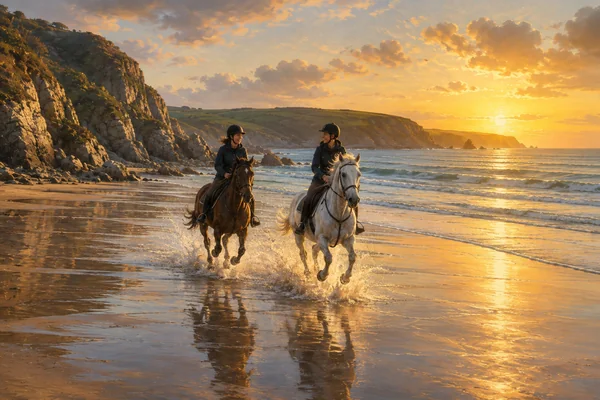
There are few better ways to meet a Cornish beach than from the saddle: the tide out, a mile of hard wet sand, spray from the hooves and a headland at each end. It’s on a lot of bucket lists for good reason, and Cornwall — with its enormous low-tide beaches and a strong riding tradition on the moors — makes it easier than almost anywhere in Britain. This guide covers where to ride, how it works, what it costs, and what to know before you book, whether you’re a lifelong rider or someone who has never sat on a horse.
Table of Contents
- How beach riding works in Cornwall
- The best beaches for horse riding
- Riding on the moors
- What to know before you book
- Personal insights and experiences
- FAQ
- References and resources
How beach riding works in Cornwall
- Through a stables, mostly. Unless you’re bringing your own horse, you book an escorted ride with a riding school or trekking centre near the beach. Rides typically run one to two hours, with a hack through lanes or dunes to reach the sand.
- Tide and time matter. Beach rides happen around low tide, on the firm sand, and many beaches only permit horses in the early morning or evening in summer, or outside the main season altogether — the stables plan around this, which is another reason to go through them.
- All levels. Most stables take complete beginners on quiet horses at a walk; experienced riders can usually book faster rides with a canter along the tideline. Say honestly what you can do.
- Book ahead. Beach rides are the most popular thing every stables offers; summer slots go weeks in advance.
The best beaches for horse riding
Perranporth
Three miles of flat, firm sand backed by dunes — the classic Cornish beach ride, and the one most people picture. Local stables run rides through the dunes and along the beach for all abilities; on a big low tide the sand seems to go on for ever.
Gwithian and Hayle Towans
Another vast stretch — three miles from Hayle to Godrevy — with the lighthouse at one end and dunes behind. Stables around Hayle and Lelant run rides down through the towans onto the sand; keep an eye out for the seals off Godrevy at the far end.
Watergate Bay and Holywell Bay
Near Newquay, both offer big low-tide sands and stables within reach: Watergate’s two miles of beach beneath the cliffs, and Holywell’s dune-backed bay with its twin rocks offshore. Newquay’s riding schools use these and other local beaches depending on tides and season.
Others worth asking about
Polzeath and Rock on the Camel estuary, Par Sands and Pentewan on the south coast, and Marazion with St Michael’s Mount as the backdrop all see riders, particularly out of season — but access rules vary by beach and by month, so ask a local stables what’s currently allowed rather than assuming.
Riding on the moors
Cornwall’s other great riding is on Bodmin Moor: open granite country, tors, ponies running semi-wild, and trekking centres around St Breward and the moor’s edges that will take you out for an hour or a whole day. It’s the counterpoint to the beach — bigger, wilder, and available whatever the tide is doing — and plenty of riders combine the two on a Cornish trip. Just don’t underestimate the weather up there; see our Cornwall weather guide and dress for the moor, not the beach.
What to know before you book
- Cost: expect roughly £40–£80 for a one- to two-hour escorted beach ride, more for private or specialist rides. Prices change; check when booking.
- What to wear: long trousers, boots or shoes with a small heel (no trainers with big grips), layers, and a waterproof — the beach is windier than the car park. Hats are provided; some stables lend boots.
- Weight and age limits apply at every stables for the horses’ welfare; check before you book rather than on the day.
- Season: autumn to spring is quietest and often the most beautiful; summer beach rides run early or late and book out fastest. Our guides to Cornwall in September and August cover what to expect.
- Watching, not riding? Low tide on Perranporth or Gwithian, early on a summer morning, is a very fine spectacle from the sand — and free.
Personal insights and experiences
I rode on a beach exactly once, about thirty-five years ago, and I remember two things: how much bigger the sea looks from a horse, and how sore I was the next day. I’ve been a happy spectator since — beach riders at low tide are one of the sights I’ll always stop for.
The real rider in our circle is a friend who’s out on the moors and beaches most weeks — and she has the best reason I’ve heard for taking it up seriously. She dreamed of a Lord of the Rings themed holiday to New Zealand and wanted to ride through parts of it, so her husband, who had never ridden, learned to ride purely so he could go with her. He caught the bug. They rode New Zealand, and now they ride Cornwall together, regularly, moor and beach. If you needed a reason to book that first beginners’ beach ride, borrow theirs.
FAQ
Q: Can you ride horses on the beach in Cornwall?
A: Yes — Perranporth, Gwithian and Hayle Towans, Watergate Bay and Holywell Bay are the classic beach rides, usually booked as escorted rides through a local stables and timed to low tide.
Q: Can beginners do a beach ride?
A: Most stables welcome complete beginners on quiet horses at walking pace; faster rides with a canter are for experienced riders. Be honest about your level when you book.
Q: How much does horse riding on a Cornish beach cost?
A: Typically around £40–£80 for a one- to two-hour escorted ride, depending on the stables and the ride. Check current prices when booking.
Q: When is the best time of year for beach riding in Cornwall?
A: Autumn to spring for quiet beaches and fewer restrictions; in summer, rides run early morning or evening around low tide and book out well ahead.
Q: Are horses allowed on all Cornish beaches?
A: No — many beaches restrict horses in summer daytime or altogether; rules vary by beach and season, so book through a stables that knows the current byelaws.
References and resources
- British Horse Society — find an approved riding centre: www.bhs.org.uk
- Visit Cornwall — horse riding: www.visitcornwall.com
- Cornwall Council — beach byelaws and dog/horse restrictions: www.cornwall.gov.uk