Quick answer: Cornwall has a wildlife spectacle for every month of the year — starling murmurations and huge seal haul-outs in winter, choughs and bluebells in spring, basking sharks and dolphins through summer, seal pups and fungi in autumn. This calendar tells you what to look for month by month, where, and how to watch it responsibly — so whichever month your visit falls in (our weather guide covers the other half of that decision), you’ll know what the county’s wild residents are doing.
Cornwall’s wildlife doesn’t keep tourist hours. The basking sharks arrive when the plankton blooms, the seal pups when the autumn storms begin, the murmurations when the visitors have all gone home — and some of the county’s best wild spectacles happen in months when the beaches are empty. This calendar pairs with our guides to seals, rock pools and conservation: what to see, when to see it, and the golden rule that runs through all of it — watch from a distance, take nothing but photographs, and let the wildlife set the terms.
Table of Contents
- Winter: December, January, February
- Spring: March, April, May
- Summer: June, July, August
- Autumn: September, October, November
- Watching well: the code
- Personal insights and experiences
- FAQ
- References and resources
Winter: December, January, February
- December — starling murmurations at their hypnotic best over reedbeds and moorland roosts at dusk (Marazion Marsh is the classic Cornish stage); estuaries like the Camel and Hayle fill with overwintering wading birds; grey seals haul out in their biggest numbers of the year.
- January — the quietest month is the seal-watcher’s secret: winter haul-outs at Mutton Cove can be the year’s largest. Owls hunt the dusk margins early; snowdrops arrive in the valley gardens by month’s end.
- February — Cornwall’s mild corner starts spring early: frogspawn in ponds (often weeks ahead of upcountry), primroses in the hedgebanks, and songbirds tuning up. On calm days, the first stirrings in the rock pools.
Spring: March, April, May
- March — toads on the march to breeding ponds, adders basking on south-facing heath (look, never touch), chiffchaffs singing in, and the coast path greening underfoot.
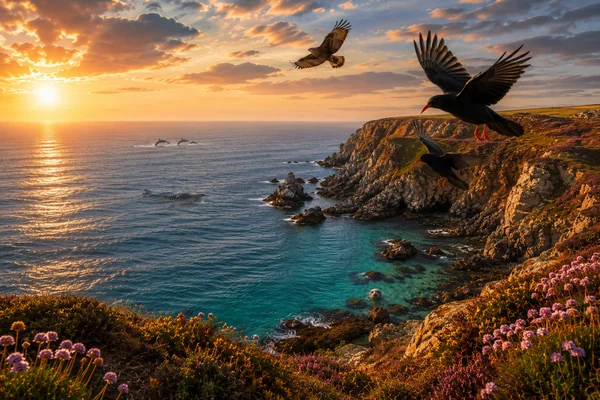
- April — bluebells begin their sweep through the valley woodlands, swallows and martins pour back in off the sea, orange-tip butterflies work the lanes — and the chough, Cornwall’s own red-billed crow, is nesting on the wilder cliffs after its famous return from extinction in the county.
- May — the richest month: bluebell peak, seabird colonies in full clamour on the offshore stacks, dolphins offshore — and the first basking sharks of the season cruising the clear water, enormous mouths agape for plankton, utterly harmless and utterly unforgettable from a clifftop.
Summer: June, July, August
- June — glow-worms lighting grassland edges on warm nights, orchids in the dunes, seabird chicks fledging, and the long evenings made for a dusk walk with bats overhead.
- July — dolphins and porpoises are the boat-trip lottery’s best month, ocean sunfish loll at the surface in warm spells, butterflies peak on the heaths, and the first jellyfish drift the coves (look, don’t touch — some sting).
- August — the family month: rock pools at their liveliest on the big low tides, crabbing harbours busy, and warm evenings for moths and bats. The crowds are part of the ecosystem now too — our August guide has the tactics.
Autumn: September, October, November
- September — the changeover month: swallows stream south, ivy bees emerge on the last flowers, fungi begin in the woods — and grey seal pupping season opens: white-coated pups on remote beaches from now into winter. Our seals guide covers where and — critically — how to watch without harming. (Visiting this month? September is Cornwall’s secret season.)
- October — seal pups peak, fungi carpet the woodland floor, winter thrushes (redwings, fieldfares) arrive on the first cold winds, and storm-blown seabirds give headland watchers their rarest sightings of the year — storm-watching weather in every sense (see October).
- November — the murmurations begin building toward their winter peak, estuaries fill with wildfowl, and the county goes quiet enough that the wildlife reclaims it — the quietest month is one of the best for the patient watcher.
Watching well: the code
The same principles cover everything in this calendar: distance first (binoculars beat closeness, clifftops beat beaches for seals); never approach, touch or feed wild animals — a seal pup alone on a beach is normal, an adder is not interested in you, and a fed animal is a harmed animal; keep dogs leashed near wildlife and respect seasonal beach rules; and leave every pool, log and nest as you found it. Cornwall’s wildlife is recovering — choughs back on the cliffs, beavers back in its valleys — and the recovery is built partly on visitors who watch well. Be one of them.
Personal insights and experiences
My own wildlife calendar is less glamorous than the one above and I wouldn’t trade it. It runs on the A38 and the lanes around the Tamar, where buzzards hang over the road so reliably that the family barely looks up any more, and deer step out of field margins often enough to keep a driver honest — the everyday wildlife of the borderlands, free with every commute. Spring belongs to the garden ponds I build: the water wakes in stages — daphnia clouds first, then the pond skaters, then the newts — a whole calendar in a few square feet of water. August is the granddaughter paddling Perranporth’s warm shallows while my son and I work the pools, and autumn is the whiting arriving off the beaches as the evenings draw in, which is my kind of wildlife spectacle: the kind you can bring home for dinner. The lesson a lifetime of this has taught me is the one this whole page is built on — the wildlife was never far away; it’s a matter of knowing when to look.
FAQ
Q: What is the best month for wildlife in Cornwall?
A: May, if you must pick one: bluebells at peak, seabird colonies in full voice, dolphins offshore and the first basking sharks. But autumn’s seal pups and winter’s murmurations argue every month has a headline act.
Q: When can you see basking sharks in Cornwall?
A: Roughly May to September, peaking early summer, when plankton blooms bring them close inshore. Clifftops and boat trips both work; sightings vary year to year.
Q: When are seal pups born in Cornwall?
A: From around September through the winter, peaking in autumn. Watch from clifftops, keep well away from any pup on a beach, and see our seals guide for the full code.
Q: Can you see dolphins in Cornwall year-round?
A: They’re present all year, but summer boat trips and calm-day headland watching give the best odds; porpoises are the commoner winter sighting.
Q: Where are the starling murmurations in Cornwall?
A: Reedbed and moorland-edge roosts from late autumn to late winter, at dusk — Marazion Marsh is the best-known site. Arrive before sunset and dress warm.
References and resources
- Cornwall Wildlife Trust — reserves, sightings and events: www.cornwallwildlifetrust.org.uk
- Cornwall Seal Group Research Trust — seal watching code: www.cornwallsealgroup.co.uk
- RSPB — Marazion Marsh and Cornish reserves: www.rspb.org.uk
- The Wildlife Trusts — basking shark code of conduct: www.wildlifetrusts.org
- British Divers Marine Life Rescue — injured marine wildlife: bdmlr.org.uk