Quick answer: Cornwall has a genuine drinks trail, and most of it is open to visitors by booking ahead. Camel Valley near Bodmin is the headline — sparkling wine that has beaten Champagne in blind tastings — but note it is closed every Saturday and Sunday, which catches out almost everyone. Healey’s at Penhallow makes Rattler and opens all year. St Austell Brewery runs tours of a Grade I listed brewhouse in its 175th year. Add Tarquin’s gin near Wadebridge, Polgoon at Penzance and Knightor and Trevibban Mill for wine, and you have several days’ worth. Book everything; several are small enough that turning up does not work.
Cornwall has quietly become a drinks county. There is sparkling wine that wins against Champagne, a gin boom that started in a Wadebridge farmhouse, cider pressed on the farm that grew the apples, vodka made from Cornish potatoes, and the only tea plantation in Britain. Nearly all of it welcomes visitors, and almost none of it is on the standard tourist circuit. Our what to eat in Cornwall guide covers the drinking in one paragraph; this is the version with directions. For where to drink the results, see our cosy pubs guide.
Table of Contents
- Read this before you book anything
- Wine: the part nobody expects
- Cider, and the one that opens all year
- Beer: an old brewery and a rescued one
- Spirits: gin, vodka and a potato farm
- The outlier: tea at Tregothnan
- Making a trip of it
- When to go
- FAQ
- References and resources
Read this before you book anything
Researching this article turned up the same problem on every single producer: published prices and opening times disagree wildly between listings, and most of them are out of date.
For one vineyard alone, four different guides quoted four different tour prices and three different schedules, none matching what the vineyard itself published. This is not carelessness by the producers — they are small businesses that change their offer every season, and the travel sites quoting them do not go back and check.
- We have deliberately not quoted ticket prices here. Anything we printed would be wrong within a season, and a wrong price is worse than no price.
- Book direct, through the producer’s own site. That is the only place the current information lives.
- Check the day of the week, not just the date. Several of these close on days you would expect them to be busiest.
- Assume booking is required. Most of these are working production sites with a handful of staff, not visitor attractions with a turnstile.
With that said, here is what exists and what each one actually offers.
Wine: the part nobody expects
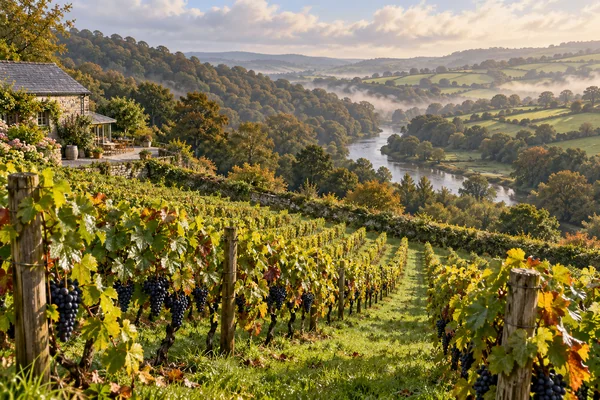
Cornish wine is not a novelty any more. The climate that makes the county mild and wet also gives long growing seasons on the right south-facing slopes, and the results have been winning international medals for twenty years. Our The Story of Cornwall covers the longer history of a county that has always grown what it could.
Camel Valley, Nanstallon near Bodmin
The one that changed the picture. Camel Valley’s sparkling wines have beaten Champagne in blind tastings, and the vineyard is set up for visitors properly.
The crucial detail, and it is in nobody’s round-up: the vineyard is closed on Saturdays and Sundays. It is open Monday to Friday, year round, including bank holidays. If you were planning a weekend visit, plan again.
- The 10:30am guided tour runs Monday to Friday from April to September, but Mondays and Fridays only from October to March. Allow 30 to 45 minutes, and a table is reserved afterwards for tasting until 12:30, so there is no need to book a separate slot.
- The 5pm Grand Tour runs Wednesday evenings, May to September only, led by a winemaker, with a tasting of at least five wines afterwards. No concessions for children on this one.
- Wine by the glass on the sun terrace, garden and tasting room, Monday to Friday 10am to 5pm, with table service and a refundable booking deposit.
- No dogs, guide dogs excepted — unusual for Cornwall and worth knowing before you drive out.
- 48 hours’ notice to cancel, or you lose the booking.
Booking is essential for tours and advisable for wine by the glass. The shop sells bottles and cases Monday to Friday, 10am to 5pm.
The others worth the drive
- Trevibban Mill, near Padstow — guided tours often led by the owners or a family member, followed by a tutored tasting in the tasting room. Runs across most of the year.
- Knightor Winery, near St Austell — vineyards and orchards, tours and tasting events, and a restaurant on site, which makes it the easiest to turn into a whole afternoon.
- Polgoon, just outside Penzance — both a vineyard and a cider producer, with guided tours of around 90 minutes including a tasting, and a self-guided option with a wine flight. Pre-book tours and restaurant tables.
If you want one, make it Camel Valley on a weekday. If you want a day of it, Knightor and Trevibban Mill both sit near the places you would be going anyway — see our road trip itinerary.
Cider, and the one that opens all year
Cornwall drinks more cider than the rest of England notices, and the biggest name is a farm you can walk round.
Healey’s Cornish Cyder Farm, Penhallow
Home of Rattler, the cloudy cider that is on every Cornish bar in summer, and the most visitor-ready producer in the county.
- Open all year round, with the exception of Christmas Day and Boxing Day — which makes it one of the few genuinely reliable wet-weather days out in a Cornish January.
- Winter hours are 9am to 5pm from November to March, extending to 6pm in September and October and 8pm in July and August.
- A Cydermaster Pass covers a self-guided tour of the press house, the distillery, the cellars and the other production areas.
- Tractor rides are an optional extra, bookable in advance or on the day.
- It runs events — pumpkin picking through October, and the Little Orchard cider and music festival in September.
It is a working farm with a distillery attached, so there is more to see than apples. It is also genuinely good with children, which most of this list is not. Our off-season guide covers what else survives the winter.
Cornish Orchards at Duloe, near Liskeard, is the other name to know — a serious producer making the drier, cleaner end of Cornish cider.
Beer: an old brewery and a rescued one
St Austell Brewery
2026 is its 175th year, and it remains the dominant brewer in the South West — Tribute and Proper Job are on bars from Penzance to Bristol. The visitor centre on the brewery site runs tours of the working brewhouse, with the Hicks Bar attached for food and a pint afterwards.
One important caveat: the brewery is a Grade I listed building with narrow entrances and staircases that cannot be altered, so the tour is not accessible to everyone. If mobility is a factor, phone and ask before booking rather than turning up hopeful.
Tours run around two hours and should be booked ahead. The brewery also launched a Tribute Ale Trail across more than 150 of its pubs for Cask Ale Week in September 2026, which is a cheaper way to drink your way round the county.
Skinner’s, Truro
Worth knowing the recent history, because it explains why the name comes and goes. Skinner’s entered administration in October 2022 and was bought out of administration in 2023 by Goodh Brewing Co, which now owns the Newham Road site. Betty Stogs and the rest are still being brewed and poured there.
The Tapyard on Newham Road serves Skinner’s alongside Goodh’s own craft beers, which is the easiest place to try both. Check current hours before travelling — this is one of those listings that has not been reliably updated.
The small ones
Sharp’s at Rock brews Doom Bar, named for the sandbank at the mouth of the Camel. Padstow Brewing Company and a long tail of small breweries fill in the rest, and most have a taproom rather than a tour. The pub is still the best brewery visit in Cornwall — see our cosy pubs guide.
Spirits: gin, vodka and a potato farm
Tarquin’s, St Ervan near Wadebridge
Southwestern Distillery started the Cornish gin boom, and the distillery tour is the most polished on this list — it won a Tripadvisor Travellers’ Choice Best of the Best award in 2024. The tour covers a welcome drink, the history, a botanical session and a walk through the distillery to the copper stills.
Colwith Farm Distillery, near Lostwithiel
The best story of the lot. Colwith is a potato farm — set up to help feed the country during the Second World War — which in 2014 began turning its own crop into Aval Dor, Cornwall’s first potato vodka. It now makes gin as well, in hand-made copper pot stills, and runs tours.
It is field-to-bottle in the literal sense: the potatoes are grown in sight of the still. Our permaculture guide makes a related argument about growing and using what a place actually produces.
And the rest
There are now distilleries from Bodmin to the Lizard, including Pocketful of Stones at Penzance and Curio Spirits on the Lizard, plus Cornish rum and vodka from several producers. Not all of them open to visitors — check before you plan a route round them.
The outlier: tea at Tregothnan
Tregothnan, on the Fal estuary near Truro, grows tea — the first and still the best known plantation in Britain. The estate’s sheltered, acidic, high-rainfall ground turns out to suit camellias, which is also why Cornwall grows the country’s best ornamental ones.
It is not a drop-in attraction in the way Healey’s is, and access is through booked estate visits rather than open gates, so check what is being offered before making the trip. But it belongs on this list, and it pairs properly with our cream tea guide.
Making a trip of it
These are scattered, as everything in Cornwall is. Three workable clusters:
- Mid Cornwall (the strongest day). Camel Valley at Nanstallon, Colwith Farm near Lostwithiel and Knightor near St Austell sit within a reasonable radius, with Healey’s at Penhallow not far north. Weekday only, because of Camel Valley.
- The Padstow end. Tarquin’s at St Ervan and Trevibban Mill near Padstow, with Sharp’s at Rock across the water — and the Padstow–Rock ferry to avoid the drive round the Camel.
- The far west. Polgoon at Penzance and Pocketful of Stones, with the Lizard distilleries south of them.
The obvious problem is the driving. Tastings and a car do not combine, and these are rural lanes. The realistic answers are a designated driver, a taxi for the final leg, or staying within walking distance of one producer and treating it as the evening rather than the day.
Several organised Cornish wine, beer and cider tours exist and solve this properly. Our branch lines guide covers the rail network, though none of these are walkable from a station, and our where to stay guide covers basing yourself nearby.
When to go
Autumn and winter are better than you would think, with one exception. Healey’s is open all year, St Austell runs through the winter and Camel Valley keeps its shop and tasting room open Monday to Friday year-round — though its tours drop to Mondays and Fridays only from October to March.
Harvest, roughly September to October, is the most interesting time at the vineyards, because there is something happening rather than just something to look at. Spring is the other good window: our March guide covers a month when Cornwall is already flowering and nothing is busy.
The exception is Camel Valley’s Grand Tour, which runs Wednesday evenings from May to September only. If that is the one you want, it is a summer trip.
And the usual Cornish caveat applies to all of it: a wet afternoon is a good afternoon for a tasting room. Our weather guide covers how often that will be the case, and the pasty guide covers what to eat first.
FAQ
Q: Can you visit vineyards in Cornwall?
A: Yes. Camel Valley near Bodmin, Trevibban Mill near Padstow, Knightor near St Austell and Polgoon at Penzance all run guided tours with tastings. Booking ahead is essential at all of them, as these are small working vineyards rather than visitor attractions.
Q: Is Camel Valley open at weekends?
A: No. Camel Valley is open Monday to Friday only, year round including bank holidays, and closed on Saturdays and Sundays. This catches out a great many visitors, as most guides do not mention it.
Q: When do Camel Valley’s tours run?
A: The 10:30am guided tour runs Monday to Friday from April to September, but only on Mondays and Fridays from October to March. The 5pm Grand Tour runs on Wednesday evenings from May to September only. Both must be booked in advance.
Q: Can you tour a brewery in Cornwall?
A: Yes. St Austell Brewery runs tours of its working brewhouse, which is in its 175th year in 2026, with the Hicks Bar on site. Be aware the brewery is a Grade I listed building with narrow entrances and staircases, so the tour is not accessible to everyone.
Q: Where is Rattler cider made?
A: At Healey’s Cornish Cyder Farm at Penhallow, near Truro. The farm is open all year except Christmas Day and Boxing Day, with a Cydermaster Pass covering a self-guided tour of the press house, distillery and cellars.
Q: What is Cornwall’s first potato vodka?
A: Aval Dor, made by Colwith Farm Distillery near Lostwithiel from potatoes grown on the farm itself. The farm was originally set up to help feed the country during the Second World War, and first produced the vodka in 2014.
Q: Why do tour prices differ between websites?
A: Because most travel listings quote prices they gathered once and never rechecked. These are small producers who change their offer each season. Always book through the producer’s own website, which is the only place the current price and schedule are reliable.
Q: Is there a tea plantation in Cornwall?
A: Yes. Tregothnan, on the Fal estuary near Truro, was the first tea plantation in Britain. Access is through booked estate visits rather than open gates, so check what is on offer before travelling.
References and resources
- Camel Valley — visit us: www.camelvalley.com
- Healey’s Cornish Cyder Farm — opening times: healeyscyder.co.uk
- St Austell Brewery — book a tour: staustellbrewery.co.uk
- Tarquin’s Cornish Gin — tours: www.tarquinsgin.com
- Skinner’s Brewery — contact and Tapyard: skinnersbrewery.com