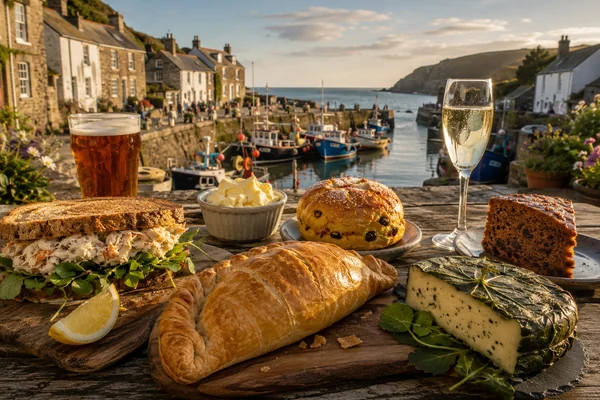
Quick answer: eat the pasty and the cream tea (jam first), then keep going — Cornish crab, mackerel and sardines straight off the day-boats, fish and chips on a harbour wall, saffron buns and hevva cake, Cornish Yarg cheese, clotted-cream ice cream, and a pint of Tribute, a Rattler cider or a Cornish gin to wash it down. Cornwall’s food is honest, local and mostly eaten outdoors. What to try, what it is, and where to find it, below.
Cornwall was feeding itself from the sea, the field and the mine long before anyone called it a food destination, and the best of what it eats today is still that: fish landed that morning, pastry built to survive a shift underground, cream so thick it holds a spoon. There’s a modern layer too — the Padstow restaurants, the gins and vineyards, the food festivals — but the heart of Cornish food is simple, and this guide is a tour of it: the classics, the things you’ll only find here, the drink, and where to eat it all.
Table of Contents
- The two icons: pasty and cream tea
- From the sea
- Bakes, cakes and cheese
- Things to drink
- Where to eat in Cornwall
- Personal insights and experiences
- FAQ
- References and resources
The two icons: pasty and cream tea
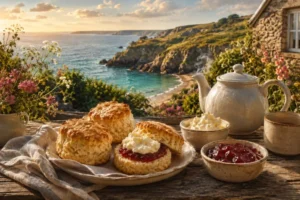
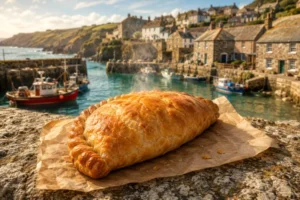
Both have protected names, both have rules, and both have their own full guides on this site. The Cornish pasty — beef skirt, potato, swede, onion, side-crimped, nothing else — is the miner’s lunch that conquered the world; our guide covers its history, the genuine recipe and where to buy one. The Cornish cream tea — scone or split, jam first, then clotted cream — is the afternoon ritual; our guide settles the jam-and-cream question for good.
From the sea
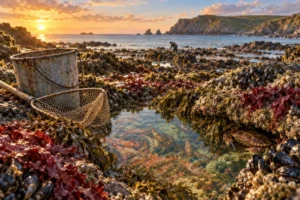
- Crab — brown crab from the pots, dressed or in a sandwich on the harbour; the Cornish crab sandwich is a lunch to plan a day around.
- Mackerel — hand-lined in summer, grilled or smoked; the taste of a Cornish August.
- Cornish sardines — the old pilchard fishery reborn: grilled whole with salt and lemon, or in stargazy pie, the Mousehole dish with fish heads gazing up through the crust, made for Tom Bawcock’s Eve.
- Fish and chips — the harbour-front chippies of Padstow, Looe, Falmouth, St Ives and Newlyn, eaten on the wall with a gull negotiating for your share.
- Mussels, cockles, oysters — from the estuaries and the Fal’s native oyster beds, one of the last sail-and-oar oyster fisheries in the world.
- Hake, pollack, lemon sole, John Dory — the day-boat fish that the good restaurants name by boat. Our sustainable seafood guide covers what to choose and why.
Bakes, cakes and cheese
- Saffron buns — the yellow, fruited yeast buns that are Cornwall’s oddest tradition (saffron, some say, traded for tin by the Phoenicians); still in every bakery, best buttered.
- Hevva cake — the flat, fruited “heavy cake” with its criss-cross top, said to be scored like a fishing net for the pilchard fleets; the pilchard lookout’s shout of “hevva!” gave it the name.
- Cornish fairings — crisp ginger biscuits, the county’s oldest sweet export.
- Cornish Yarg — a nettle-wrapped semi-hard cheese made near Truro, and Cornwall’s best-known; the county has a fine run of small cheesemakers, from Cornish Blue to the goat’s cheeses of the west.
- Ice cream — made with clotted cream and therefore richer than anywhere else’s; every harbour has a queue for it.
- The Sunday roast and the pub — Cornish beef and lamb off the hills, and pubs that take it seriously.
Things to drink
- Beer — St Austell Brewery’s Tribute and Proper Job are on every bar; Skinner’s, Sharp’s (Doom Bar, named for the sandbank at Padstow) and a wave of small breweries fill the rest.
- Cider — Rattler, from Healey’s near Newquay, is the Cornish holiday cider; Cornish Orchards and the small farm presses do the serious stuff.
- Gin and spirits — Tarquin’s at Wadebridge started the Cornish gin boom; there are now distilleries from Bodmin to the Lizard, and Cornish rum and vodka too.
- Wine — Camel Valley near Bodmin makes sparkling wine that has beaten Champagne in blind tastings; vineyard tours are a fine wet-day plan.
- Tea — grown at Tregothnan on the Fal, the first tea plantation in Britain, and drunk in quantity with the cream tea above.
Where to eat in Cornwall
The famous end is Padstow, Port Isaac and Newlyn — the celebrity-chef harbours where you book weeks ahead. The honest end is everywhere else: harbour cafés doing crab sandwiches and the day’s fish, bakeries with a queue at noon, farm shops with the cream made that morning, and pubs on the water. Rule of thumb: eat what came in on the boats, ask which boat, and if the pasty shop has a queue of people in work boots, join it. For a food day out, our south-east loop — Looe for pasties and shellfish, Fowey for lunch, Charlestown for a pint — is a decent template.
Personal insights and experiences
Our house eats Cornish more or less by default: pasties are my favourite lunch and my father makes them without measuring anything; the cream teas are my wife’s and better than any tea room’s; and seafood is simply food here — I fish from the shore, I eat what I catch, and I buy cockles and mussels from Looe fish market more often than I buy bread. That’s not a food-writer’s Cornwall, it’s the ordinary one, and it’s the version I’d point a visitor at: the harbour wall, the bakery queue, the fish market, and a proper pasty eaten looking at the sea. Everything else on this page is worth trying; those three are worth coming for.
FAQ
Q: What food is Cornwall famous for?
A: The Cornish pasty and the cream tea above all, then crab, mackerel and Cornish sardines from the day-boats, saffron buns, hevva cake, Cornish Yarg cheese and clotted-cream ice cream.
Q: What is stargazy pie?
A: A Mousehole fish pie with the sardines’ heads poking up through the crust, made for Tom Bawcock’s Eve on 23 December in memory of the fisherman said to have saved the village from famine.
Q: What is a saffron bun?
A: A yellow, lightly sweetened yeast bun flavoured with saffron and dotted with dried fruit — a Cornish bakery staple, eaten split and buttered.
Q: What is the Cornish drink?
A: Ale from St Austell Brewery (Tribute, Proper Job) or Sharp’s (Doom Bar), Rattler cider, Cornish gin such as Tarquin’s, and Camel Valley sparkling wine.
References and resources
- Cornwall Good Seafood Guide: www.cornwallgoodseafoodguide.org.uk
- Cornish Pasty Association: cornishpastyassociation.co.uk
- Camel Valley vineyard: www.camelvalley.com
- Visit Cornwall — food and drink: www.visitcornwall.com