Quick answer: yes, you can retire to Cornwall — but retire to the real one. That means knowing the county’s two selves (summer chaos, winter quiet), choosing community over postcard (inland market towns keep both), budgeting honestly for the coastal premium, trades costs and a car you cannot do without, and understanding the healthcare geography before you need it. And if you’re not wealthy, there is a road home almost nobody writes about: my own father took it. An honest guide from a family that has watched it done — below.
Most “retire to Cornwall” articles are written by people selling you a house. This one is written by a family that has actually watched a Cornish retirement happen — not the brochure version with the sea-view terrace, but the real one, with a market town, a proper community, and a route home that cost patience instead of a fortune. Cornwall rewards retirees who arrive with open eyes; it punishes the ones who buy an August postcard and discover they’ve moved to February. Here’s the difference.
Table of Contents
- The two Cornwalls: marry the whole year
- Coast or inland: the community question
- The money: prices, premiums and trades
- The practical realities
- The road home without wealth
- Making it work: community first
- Personal insights and experiences
- FAQ
- References and resources
The two Cornwalls: marry the whole year
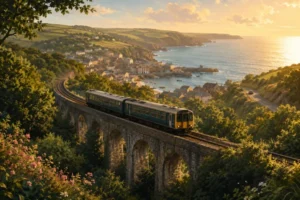
Cornwall is two counties wearing one name. Summer Cornwall is the one you fell for on holiday: warm, golden, and heaving — millions of visitors, full car parks, a twelve-minute journey taking forty-five. Winter Cornwall is the opposite in every particular: quiet, wet, windswept and dark by teatime, with seasonal businesses shuttered and whole coastal villages gone dim (our November and December guides tell that half truthfully). Retiring here means marrying both. The happiest Cornish retirees are the ones who like the winter version — the firesides, the empty beaches, the small-town rhythms — and treat summer as the season they share their home with everyone else.
Coast or inland: the community question
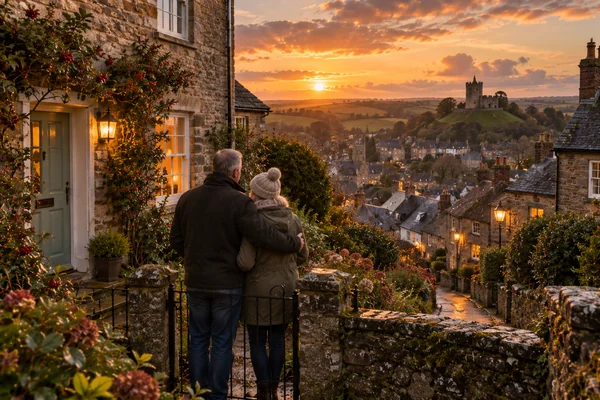
The instinct is the sea view. The wisdom, increasingly, is the town. In the prettiest coastal villages, second homes and holiday lets now make up a huge share of the housing — St Ives voted by referendum to restrict new builds to full-time residents, and other towns have followed — which means the village that enchanted you in August can be dark, shuttered and neighbourless in January, precisely the months a retiree needs neighbours most. Cornwall’s inland market towns are the quiet answer: Launceston, Liskeard, Bodmin and their kind keep year-round shops, surgeries, clubs and people, at prices a coastal postcode can’t touch, with the coast still a short drive away (our area guide makes the same case for holidays; for a life it’s stronger still). The honest rule: buy the view and you may rent the community; join the town and both are yours.
The money: prices, premiums and trades
- House prices run slightly above the UK average despite Cornish wages running well below it — and the average hides a steep gradient: the coast and the pretty names carry a heavy premium; inland towns and villages are markedly kinder.
- Trades cost more than you’re used to: a county full of holiday-let renovations and incomer refurbishments keeps builders, plumbers and electricians busy and priced accordingly — budget generously for any doing-up, and book early.
- Running costs: much housing stock is old, granite, and character-rich — which is estate-agent language for damp-prone and dear to heat. Survey hard, ask about the winter.
- The upside: day-to-day life — the walks, the beaches, the gardens, the wildlife — is largely free, and the county is gloriously set up for a modest, outdoor, unshowy retirement.
The practical realities
- Healthcare geography matters: Cornwall has one acute hospital — the Royal Cornwall at Treliske, Truro — plus community hospitals for minor care; in the far east of the county, Plymouth’s Derriford is often the nearer major hospital. Wherever you settle, register promptly with a GP and learn your actual distances before you need them.
- A car is not optional: the branch railway and buses are lifelines, not a network; even lifelong locals with bus passes keep the car. Factor in narrow lanes and summer traffic.
- Shopping is smaller: no city-scale retail — the nearest IKEA and big-brand runs mean Exeter or Plymouth; deliveries and independents fill the gap far better than they did a decade ago.
- Distance from family is the quiet one: Cornwall is a long way from everywhere, which is the point — and the cost. Grandchildren upcountry means real journeys; be honest about it before, not after.
The road home without wealth
Here is the part every other guide skips, and the reason this one exists. My father was born in St Columb Major and spent his early years there and around Penzance before his family moved to Plymouth when he was a boy. He wanted to go back for most of his life — and for most of his life, he couldn’t afford to. The retirement-guide industry has nothing to say to a man in that position; it assumes a house to sell and savings to spend. What he had instead, eventually, was the determination to stop waiting. He looked into a mutual exchange — the scheme by which council and housing-association tenants anywhere in the country can swap homes with each other — found a match in Launceston, and took it. That simply, after a lifetime away, a Cornishman went home. If that’s your situation, know the routes exist: mutual exchange through the national swap platforms if you’re already a social tenant, and Cornwall’s Homechoice housing register for social housing in the county (be realistic: demand is high and local connection counts — a born Cornishman coming home has a story worth telling on the application). The sea view doesn’t come with it. Cornwall does.
Making it work: community first
- Rent a winter before you buy — January in your chosen town will teach you more than five August fortnights.
- Join things immediately: the choir, the club, the volunteer rota, the chapel coffee morning. Cornish communities are warm but they are joined, not just moved into — and a network in place before you need one is the single best retirement decision after the postcode.
- Pick your town for your eighties, not your sixties: level streets, a surgery, a bus stop and neighbours beat a clifftop you’ll one day struggle to drive from.
- Keep the treats: living here means Mousehole’s lights, storm-watching, and empty beaches on a Tuesday. Retirees who stay in love with Cornwall are the ones who keep doing the things visitors queue for.
Personal insights and experiences
My parents’ retirement in Launceston is the proof behind every paragraph above. They chose — life chose for them, and they chose well within it — the inland version: a real town with a castle on its hill, neighbours who know them, everything walkable, family a Boxing Day drive away, and the north coast twenty minutes off when the sea calls. My father’s homecoming took decades longer than he wanted and arrived by a humbler road than the magazines photograph, and I’ve never once heard him wish it were the brochure version instead. And me? Yes — I’d retire to Cornwall, and I’ll declare my version now so future-me can be held to it: a modest place on the coast with enough land to grow food, harvest rainwater and dig ponds — the full self-sufficient dream this site keeps circling. No pool required. Between my father’s town and my imagined smallholding sit the two honest ends of retiring here: community or land, the returning and the becoming. If I’ve learned anything from watching him, it’s that the first one matters more — and that Cornwall, reached by any road at all, is worth the wait.
FAQ
Q: Is Cornwall a good place to retire?
A: For people who love the whole year — including the wet, dark, quiet winter — genuinely yes: safe, beautiful, outdoor, community-minded. For sun-chasers and city-service users, honestly no.
Q: Where is the best place in Cornwall to retire?
A: For most retirees, a year-round market town (Launceston, Liskeard, Bodmin, Truro’s edges) beats a pretty coastal village hollowed by holiday lets: real community, real services, kinder prices — with the coast minutes away.
Q: Can you retire to Cornwall without being rich?
A: Yes. Inland prices are far below coastal ones, renting is normal, and for social tenants a mutual exchange can bring you home without buying at all — it’s how my own father returned. Realistic budgets and inland postcodes are the keys.
Q: What about healthcare in Cornwall?
A: One acute hospital (Treliske, Truro) serves the county, with community hospitals for minor care; eastern Cornwall often uses Plymouth’s Derriford. Check your distances and register with a GP early — geography is part of the decision.
Q: What’s the biggest mistake people make retiring to Cornwall?
A: Buying the August version: a summer-perfect coastal cottage that turns out isolated, expensive to heat and neighbourless in winter. Rent a January first, and choose community over view.
References and resources
- Cornwall Housing / Homechoice — the county’s social-housing register: www.cornwallhousing.org.uk
- HomeSwapper — the national mutual-exchange platform for social tenants: www.homeswapper.co.uk
- Age UK Cornwall — local support and community groups: www.ageuk.org.uk/cornwall
- Royal Cornwall Hospitals NHS Trust: www.royalcornwall.nhs.uk
- ONS — regional house-price and wage data: www.ons.gov.uk