Quick answer: the B&B is the most underrated stay in Cornwall and the right answer for a short trip. No changeover day, no minimum week, breakfast included and a host who knows the tides — which is exactly what a cottage cannot give you for two or three nights. The rating system is worth understanding: B&Bs are assessed by AA inspectors under licence for VisitEngland and carry either 3 to 5 stars or “Quality Assessed” with no stars, which is an approval rather than a low score. The two things to check before booking anything in Cornwall: parking, and whether they take a single night at a weekend.
Cornwall’s accommodation conversation is dominated by cottages and, lately, by hotels with hot tubs. The bed and breakfast gets overlooked, which is odd, because for the trip most people actually take — two or three nights, somewhere specific, out of season — it beats both on price, flexibility and usefulness. This covers what the Cornish B&B scene is, how to read the ratings, and what to check before booking. Our where to stay guide covers choosing your area first, which matters more.
Table of Contents
- B&B, guest house, inn with rooms
- How to read the stars, because they are not what you think
- Why a B&B beats a cottage for a short trip
- What to check before booking
- Where they cluster
- The off-season argument
- FAQ
- References and resources
B&B, guest house, inn with rooms
Three things with overlapping names, and the differences are practical rather than legal.
| What it is | Best for | |
|---|---|---|
| Bed and breakfast | Usually someone’s home with a few guest rooms; the host lives there | Local knowledge, short stays, value |
| Guest house | Larger, more rooms, run as a business rather than a household; often no evening meal | A bit more privacy, still well under hotel prices |
| Inn with rooms | A pub with bedrooms upstairs — frequently the only accommodation in a village | Walking trips, winter, and not having to drive to dinner |
The inn with rooms is Cornwall’s strongest version of this, and the one visitors underuse. A pub on the coast path or in a moorland village with four rooms upstairs solves dinner, breakfast, the drive and the weather in one booking. Our cosy pubs guide covers which pubs are worth the trip in the first place — several of them have rooms.
How to read the stars, because they are not what you think
This confuses almost everybody and it is genuinely useful to understand.
Quality assessment in England runs through VisitEngland Assessment Services, delivered under licence by AA Media, with AA inspectors carrying out the assessments. For B&Bs and guest accommodation the structure is:
- 3, 4 or 5 stars — a graded quality rating following inspection.
- “Quality Assessed” — approved, but without a star grade. This replaced the old one- and two-star tiers.
- “Visitor Ready” — a newer baseline accreditation sitting below the graded ratings.
The key point: “Quality Assessed” is not a bad score, it is a different thing. A place with no stars has not necessarily failed anything — it may simply not be in the graded scheme. Equally, a great many excellent Cornish B&Bs are in no scheme at all, because assessment costs money and a place that fills from repeat guests has little reason to pay for it.
So read the stars as a floor, not a ranking. Four stars tells you the plumbing and the breakfast meet a standard. It does not tell you the host knows which cove is sheltered in a northerly, and that is the thing you are actually buying.
Why a B&B beats a cottage for a short trip
This is the case, and it is stronger than the booking sites suggest.
- No minimum week and no changeover day. Cornish self-catering in season is commonly let as full weeks on a fixed changeover, which rules out a two-night trip entirely. A B&B will take Friday and Saturday. Our couples guide covers the same problem from the couples’ angle.
- You are not paying for empty bedrooms. Most Cornish cottages sleep four to six and charge for the cottage. Two people in a B&B pay for two people.
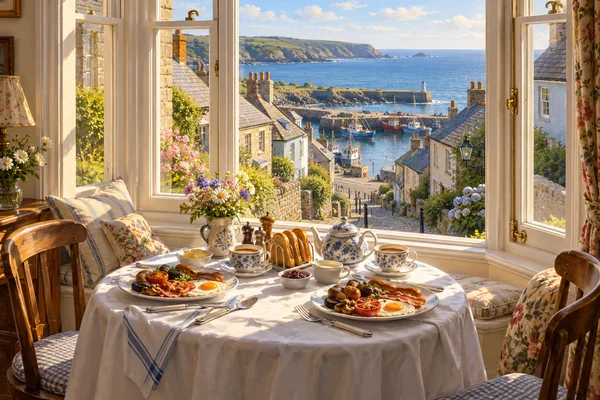
- Breakfast is included and it is usually good. Cornwall has the raw materials — eggs, bacon, hog’s pudding, local bread — and B&Bs compete on breakfast.
- The host is the feature. Tide times, which beach works in which wind, where to eat on a Tuesday in February, and whether the lane floods. Our what to eat guide and cream tea guide cover what to ask about.
- They are often in the village itself, where cottages and hotels are not — which in Cornwall means you can walk to dinner and leave the car. Our parking guide explains why that matters more here than almost anywhere.
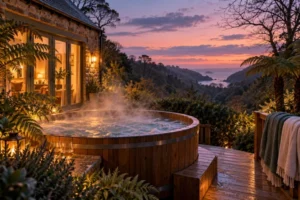
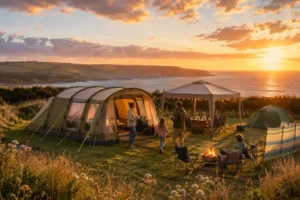
The cottage still wins for a week, for a group, for dogs and for cooking. Our hot-tub cottages guide, unique stays guide and camping guide cover the alternatives properly.
What to check before booking
Cornwall-specific, and in rough order of how often it goes wrong.
- 1. Parking. The single most important question, and the one most listings fudge. “Parking available” may mean one space for four rooms, a permit for a public car park, or a space three streets away up a hill. Ask how many spaces, where exactly, and whether it is guaranteed.
- 2. Will they take a single night? Many Cornish B&Bs impose a two-night minimum at weekends and through the summer, and some charge a single-night supplement. Ask rather than assume.
- 3. Is breakfast cooked, and when? Some serve a fixed sitting, which matters if you want an early start for a walk or a tide.
- 4. Arrival times. A household B&B is not a 24-hour reception. If you are arriving late off the A30, say so when booking.
- 5. Dogs and children. Both vary enormously and neither is safe to assume in a small household. Our dog-friendly guide covers the wider picture.
- 6. Stairs and access. Cornish village buildings are old, narrow and vertical. If stairs are an issue, ask specifically which floor and how many.
- 7. What is actually nearby in winter. A B&B in a village where the one pub closes from November is a different proposition. Our off-season guide covers what stays open.
Where they cluster
Not evenly spread, and the pattern is useful.
- The harbour towns — Falmouth, Penzance, St Ives, Fowey, Looe — have the densest supply and the best value, because they have year-round populations and Victorian houses with spare rooms. Falmouth and St Ives are also on branch lines, so you can arrive without a car: see our branch lines guide.
- Coast path villages run B&Bs and inns aimed squarely at walkers, often with drying facilities, early breakfasts and luggage transfer arrangements. Our coast path guide covers a stretch worth doing this way.
- Moorland and inland villages are the cheapest and quietest, and much better placed for stargazing and for reaching both coasts in a day.
- The honeypot villages — Port Isaac, Mousehole, Polperro — have few rooms and charge accordingly. Staying in one is lovely and expensive; staying near one is neither.
The off-season argument
Everything above is more true between October and April. Rates fall sharply, minimum stays largely disappear, and the host has time to talk to you — which in a B&B is most of the value.
The limitation is that some B&Bs close for the winter, particularly in the smaller villages, and those that stay open may serve breakfast on a reduced basis. Book directly and ask. Our off-season guide covers the wider winter picture, which is more open than people expect.
FAQ
Q: What is the difference between a B&B, a guest house and an inn with rooms?
A: A B&B is usually a home with a few guest rooms and a host living there. A guest house is larger and run as a business. An inn with rooms is a pub with bedrooms upstairs, which in many Cornish villages is the only accommodation and solves dinner and breakfast at once.
Q: Who awards star ratings to B&Bs in England?
A: Assessment runs through VisitEngland Assessment Services, delivered under licence by AA Media, with AA inspectors carrying out the assessments. B&Bs receive either 3, 4 or 5 stars, or “Quality Assessed” status with no star grade.
Q: Does a B&B with no stars mean it is poor?
A: No. “Quality Assessed” is an approval without a star grade, replacing the old one and two-star tiers, and many excellent Cornish B&Bs are not in any scheme at all because assessment costs money and they fill from repeat guests. Read stars as a floor, not a ranking.
Q: Is a B&B cheaper than a cottage in Cornwall?
A: For two people on a short trip, usually yes. Cottages are priced for the property, most sleep four to six, and in season they are often let as full weeks on a fixed changeover day. A B&B charges for two people, includes breakfast and will take a weekend.
Q: What should I check before booking a Cornish B&B?
A: Parking first, in detail, because listings fudge it. Then whether they take a single night, when breakfast is served, what time you can arrive, whether dogs and children are accepted, how many stairs there are, and what is still open nearby if you are visiting in winter.
Q: Can you stay in a Cornish pub?
A: Yes, and it is one of the best options in the county. Many Cornish pubs have rooms upstairs, particularly on the coast path and in moorland villages, which means you can walk to dinner, leave the car and avoid driving home in the dark on single-track lanes.
Q: When is the best time to book a B&B in Cornwall?
A: Between October and April for value and flexibility: rates drop, minimum stays largely disappear and the host has time for you. Check that the specific B&B stays open through the winter, as some in smaller villages close.
References and resources
- VisitEngland Assessment Services — bed and breakfast scheme: visitenglandassessmentservices.com
- VisitEngland — quality assurance schemes: www.visitengland.com
- South West Coast Path — accommodation: www.southwestcoastpath.org.uk
- Visit Cornwall: www.visitcornwall.com