Quick answer: winter is the best walking season in Cornwall and the one that catches people out. Four things change, and none of them is the cold. Daylight: about eight hours around the solstice, with the sun down before half past four. Mud: the inland paths and the field sections become genuinely hard work. Wind: it is the wind, not the temperature, that decides whether a clifftop is pleasant or miserable. And everything shuts — no lifeguards on any beach, seasonal ferries stopped, cafés closed, and some car parks locking at dusk. Plan around the light and the forecast and it is the best three months of the year out there.
Cornwall is a walking county that most people only walk in August, which is the wrong month for it: hot, crowded, and with the paths at their busiest. Between November and February you get the same coast with nobody on it, the dog restrictions lifted, and the light that made painters move here. What you also get is four hours less daylight and a lot more mud. This is how to walk here in winter without it going wrong. For specific routes, our Perranporth to St Agnes guide and woodland walks guide are the place to start, and the walking for wellness guide covers why it is worth the bother.
Table of Contents
- Why winter is the better season
- Daylight is the real constraint
- Mud, wind and what is actually underfoot
- What is shut, and why it matters more than you think
- Choosing a winter walk
- The things that actually go wrong
- FAQ
- References and resources
Why winter is the better season
- The paths are empty. The South West Coast Path in January is yours in a way it never is in summer.
- Dogs can go everywhere. Cornwall’s seasonal beach restrictions lift at the end of the summer, so from October the whole coast is open to them again — see our dog-friendly beaches guide and dog-friendly Cornwall guide.
- The light is the best of the year. Low sun across wet sand and granite, and the sun setting in front of you rather than overhead. Our sunset spots guide covers where to be for it.
- The sea is at its most dramatic. Winter swells are the reason storm watching is a Cornish pastime — our storm watching guide covers doing it from a safe distance.
- Everything is cheaper and you can park. Our coastal towns in winter guide covers which towns stay open to come back to.
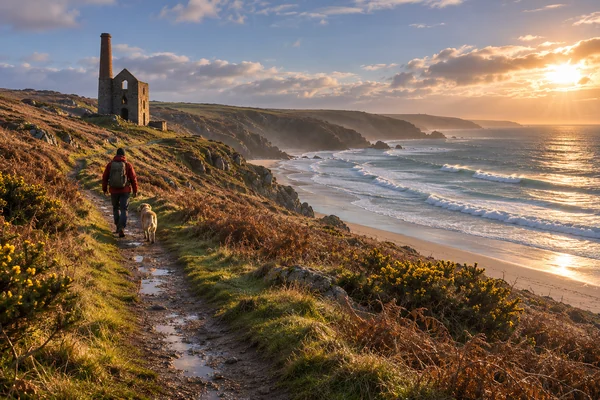
And the mining coast reads better in winter, when the gorse is down and the engine houses stand clear against a grey sea. Our tin mining heritage guide covers what you are looking at.
Daylight is the real constraint
This is the one people underestimate, because eight hours sounds like plenty until you are an hour from the car.
| When | Daylight | Sunset (far west) |
|---|---|---|
| Around the solstice | About 8 hours | Before 4.30pm |
| 1 January | About 8 hours | Around 4.30pm |
| 31 January | About 9¼ hours | Around 5.13pm |
- Work backwards from sunset, not forwards from your start time. Decide when you must be back at the car, then halve the time left.
- Add an hour to any summer timing. Mud, wind and stiles in the wet all slow you down, and a coast path that took three hours in July will not take three hours in January.
- Carry a torch even on a short walk. Dusk on a cliff path arrives faster than you expect and the path is not lit.
- The flip side is that the dark is an attraction. Our stargazing guide covers Bodmin Moor’s dark skies, which are at their best on exactly these nights.
Our December guide, January guide and February guide guides cover each month’s weather and light in detail.
Mud, wind and what is actually underfoot
Mud is the main change
Cornish paths in winter are wet. The coast path itself drains reasonably well on the cliff sections, but the field crossings, the stiles and anything inland turn heavy. Woodland and valley paths are the worst of it.
Boots, not trainers, and accept that the walk will be slower and dirtier than the map suggests. If you want firm ground, stay high on the cliffs rather than dropping inland — or use our woodland walks guide and pick the ones with made surfaces.
Wind decides the day
A still wet day on the coast path is pleasant. A dry gale is not. Cornwall’s winter is defined by Atlantic wind rather than cold, and an exposed clifftop in a strong westerly is genuinely unpleasant and occasionally dangerous. Our weather guide covers how often that happens.
The practical rule: check wind speed and direction, not just rain. A northerly leaves the south coast sheltered; a southwesterly does the opposite. Cornwall is narrow enough that you can usually drive to the sheltered side in half an hour.
Tides still matter
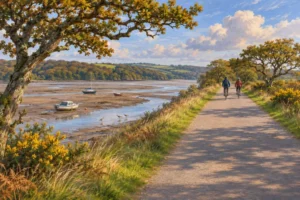
Beaches cut off in winter exactly as they do in summer, and with fewer people about to notice. Check the tide for any walk that crosses sand or uses a cove, and remember the seasonal ferries that shorten estuary walks have stopped — our ferries guide covers which run year-round.
What is shut, and why it matters more than you think
- There are no lifeguards on any Cornish beach in winter. Cover ends with the season and does not resume until spring. This matters for walkers because a beach that looks benign is unpatrolled, and winter swells make rips worse.
- Seasonal ferries have stopped, which can turn a short estuary crossing into a long detour — the Helford walk-around is thirteen miles. See our ferries guide.
- Cafés and beach kiosks are closed, so the halfway stop you were counting on may not exist. Carry food and a flask. Our off-season guide covers what does stay open.
- Some car parks lock at dusk. If you are planning to finish at sunset, check you can still get the car out — our parking guide covers the rules.
- Phone signal is poor in the coves and valleys, which is where you would most want it. Download the map before you set off.
Choosing a winter walk
The useful distinction is exposure. Pick by what the weather is doing rather than by what is prettiest.
| Conditions | Go here |
|---|---|
| Still and clear | The open cliffs. This is what you came for |
| Windy | Sheltered woodland and river valleys, or the lee coast |
| Wet underfoot | Cliff sections and made paths rather than field crossings |
| Big swell | High ground with a view of it, well back from the edge |
| Short on daylight | A there-and-back rather than a circuit, so you can turn round at any point |
Our Perranporth to St Agnes guide covers one of the best cliff stretches in the county, and the woodland walks guide covers the inland alternatives for when the wind is up.
The things that actually go wrong
- Unfenced cliff edges, in wind, on wet ground, in failing light. This is the real risk and it is worth stating plainly: stay well back from the edge, and further back than feels necessary in a gale.
- Old mine workings. Shafts on the mining coast are capped where they are known about and not all are obvious, particularly under winter vegetation. Stay on the path — our tin mining heritage guide covers the ground you are walking over.
- Cornish hedges and lanes. If a walk uses a lane, remember these are single-track with blind bends and stone banks you cannot step into — our Cornish hedges piece explains what they are. Walk facing traffic and wear something visible.
- Cold, wet and still a long way out. Getting wet early on a winter walk changes it completely. Carry a spare layer in a dry bag rather than relying on a jacket.
- Tell somebody your route, particularly if you are walking alone out of season, when there may be nobody else on the path at all.
Then find a fire. The point of a Cornish winter walk is the pub at the end of it, and our cosy pubs guide covers the ones worth planning the route around.
FAQ
Q: Is Cornwall good for walking in winter?
A: It is the best season for it. The coast path is empty, dog restrictions on beaches have lifted, the low light is the finest of the year and everything is cheaper. The trade is about four hours less daylight than summer, a lot more mud, and Atlantic wind.
Q: How much daylight does Cornwall get in winter?
A: About eight hours around the solstice, with sunset before half past four in the far west. January gains over an hour across the month, reaching about nine and a quarter hours by the 31st, with sunset near 5.13pm.
Q: What should I wear for a winter walk in Cornwall?
A: Boots rather than trainers, because the field sections and inland paths are genuinely muddy, and windproof layers rather than heavy ones. It is the wind that makes a Cornish winter unpleasant, not the temperature. Carry a spare layer in a dry bag and a torch even for a short walk.
Q: Are there lifeguards on Cornish beaches in winter?
A: No. RNLI cover ends with the summer season and does not resume until spring, so every winter beach is unpatrolled. Winter swells also make rip currents stronger, which matters even if you are only walking.
Q: Which Cornish walks are best in bad weather?
A: Sheltered woodland and river valleys when the wind is up, and the lee coast — a northerly leaves the south coast sheltered and a southwesterly does the opposite. Cornwall is narrow enough to drive to the calm side in about half an hour.
Q: Do the ferries that shorten coast path walks run in winter?
A: Several do not. The Place Ferry, the Helford ferry, Gillan Creek and the Newquay to Crantock crossing are seasonal and stop around the end of October, which can turn a short crossing into a long detour — the walk around the Helford is about thirteen miles.
Q: Is it safe to walk the coast path alone in winter?
A: It can be, with planning. Tell somebody your route, carry a torch and a charged phone knowing signal is poor in coves and valleys, stay well back from unfenced edges in wind, and prefer a there-and-back over a circuit so you can turn round at any point.
References and resources
- South West Coast Path: www.southwestcoastpath.org.uk
- RNLI — beach safety: rnli.org
- Met Office — forecast: www.metoffice.gov.uk
- UK tide times: www.tidetimes.org.uk