Quick answer: far more is open in Cornwall between November and March than people expect, but it isn’t evenly spread. The big indoor attractions run all year — the Eden Project, the National Maritime Museum, Tate St Ives, Bodmin Jail, Geevor, the aquarium and the Seal Sanctuary. The great gardens split: Trebah, Trelissick, Lanhydrock and Cotehele stay open, while Caerhays, Trengwainton and Glendurgan are shut until spring. St Michael’s Mount closes its castle. Minack shuts Mondays and Tuesdays. Eden closes for maintenance on several weekdays in January and February. And there are no lifeguards on any beach until spring. Here’s what’s open, what isn’t, and what to check before you drive anywhere.
This is the question everyone asks about a Cornish winter break and nobody really answers: will anything be open? The honest answer is that the county doesn’t shut, but it does thin out, and the thinning is unpredictable enough that the wrong assumption wastes a day. What follows is the current picture, as published by the places themselves, along with the pattern of winter closures worth knowing. Dates change, so treat this as a map rather than a timetable. Our month guides for January and February go deeper on the weather.
Table of Contents
- What’s open all year
- What’s closed, or seasonal
- The coast in winter
- There’s more on than you’d think
- Staying and eating
- What to check before you drive anywhere
- Why go at all
- FAQ
- References and resources
What’s open all year
These run right through the winter, and they’re the backbone of a wet-weather itinerary:
- The Eden Project, with one caveat: it takes maintenance closures. It has published 4–8, 11–15 and 19–21 January and 2–4 and 9–11 February 2027 as closed days. Check before booking anything around it.
- National Maritime Museum Cornwall, Falmouth — open daily and the strongest all-weather day out in the county.
- Tate St Ives — open daily, though gallery displays rotate through the winter, so check what’s actually hanging.
- Bodmin Jail — open all year, with some early-January days closed for maintenance.
- Geevor Tin Mine, Pendeen — open Sunday to Friday, closed Saturdays.
- Blue Reef Aquarium at Newquay and the Cornish Seal Sanctuary at Gweek — both open daily.
- Trebah Garden — open every day of the year, weather permitting.
- Trelissick, Lanhydrock and Cotehele — the year-round National Trust properties, with gardens through the winter and estates open dawn to dusk.
- The Minack Theatre — open to visit, but closed Mondays and Tuesdays from November to February.
What’s closed, or seasonal
- St Michael’s Mount — the castle closes for the winter. The island is still reachable on foot at low tide, and the walk out is worth doing in winter light.
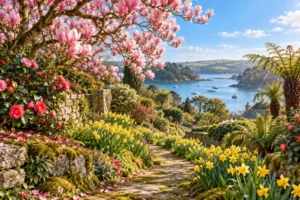
- Caerhays — the great magnolia and camellia garden opens in February, not before.
- Trengwainton and Glendurgan — seasonal National Trust gardens, typically opening around the end of February.
- Most campsites — the Cornish norm is March or Easter to October, though Ayr at St Ives, Treloan at Portscatho and Ruthern Valley near Bodmin stay open all year.
- Some pubs reduce their days. Several close at the start of the week in winter. Others, like the Gurnard’s Head and Cadgwith Cove Inn, make a point of being open all year.
- Gone for good: Flambards closed after its 2024 season and Dairyland has shut. Poldark Mine is reported closed. Old guides still list all three.
The coast in winter
Two things change completely, and both matter more than any opening time.
- There are no lifeguards. The RNLI’s season on the longest-patrolled Cornish beaches ran to the start of November, and cover doesn’t resume until spring. Every winter swim is unpatrolled, in a sea of about 8–10°C.
- The beaches open up for dogs. Cornwall’s seasonal dog restrictions end with the summer, so from October the whole coast is available — see our dog-friendly beaches guide for the rules and the dates they resume.
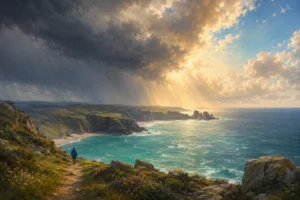
What you gain is the coast at its most dramatic and completely empty: big Atlantic swells, low light, and a beach to yourself on a Tuesday in January. Our January guide covers watching that safely, which mostly means from high ground and well back.
There’s more on than you’d think
The winter calendar is busier than the summer one in places, and most of it is free:
| When | What | Where |
|---|---|---|
| Early December to early January | Harbour Christmas lights | Mousehole |
| Mid-December | Montol, the midwinter solstice festival | Penzance |
| 23 December | Tom Bawcock’s Eve and stargazy pie | Mousehole |
| New Year’s Day | Community swims | Polzeath, Porthtowan, Bude, Falmouth and others |
| 6 January | The Bodmin Wassail, first recorded in 1624 | Bodmin |
| Early February | St Ives Feast and the hurling of the silver ball | St Ives |
| Shrove Tuesday | Hurling the silver ball | St Columb Major |
| 5 March | St Piran’s Day | Perranporth and across Cornwall |
Our guides to Christmas in Cornwall and the festival year have the detail.
Staying and eating
Winter is when Cornwall is affordable. Cottages are at their cheapest, and the hotel spas publish lower midweek prices: The Headland’s two-hour thermal pass, for instance, is £20 Monday to Thursday against £30 at the weekend. Our guides to spa breaks, cottages with hot tubs and romantic winter breaks cover the options.
Eating out needs a little more thought. Kitchens close earlier, some pubs shut at the start of the week, and the good ones book up on a Friday even in February. Ring ahead rather than turning up, especially anywhere food-led. Our guide to cosy Cornish pubs names the ones with real fires, and says which reduce their days in winter.
What to check before you drive anywhere
This is the practical heart of it. Five checks, in order:
- The venue’s own website, not an aggregator. Old listings outlive the businesses they describe: three well-known Cornish attractions on the lists are closed or gone.
- Winter hours, not summer ones. Many places switch at the start of November and back around Easter.
- Mondays and Tuesdays. That’s when winter closures cluster, across pubs, attractions and theatres alike.
- Maintenance windows. January and February are when the big attractions do their repairs, and Eden publishes its closures months ahead.
- The phone. For anywhere small, a thirty-second call beats any website. Winter staffing is thin and pages go stale.
Why go at all
Because it’s the best time to be here. The light in January and February is extraordinary, the beaches are empty, the sea is at its most impressive, prices are at their lowest, and you can get a table anywhere. The gardens start again in February with snowdrops and the first camellias. Dark skies over Bodmin Moor are at their best in the long winter nights. And the county feels like itself rather than a holiday resort, which is the thing summer visitors never see.
FAQ
Q: Is anything open in Cornwall in winter?
A: Yes, most of the indoor attractions run all year: the Eden Project, the National Maritime Museum at Falmouth, Tate St Ives, Bodmin Jail, Geevor Tin Mine, Blue Reef Aquarium and the Cornish Seal Sanctuary, along with the year-round gardens at Trebah, Trelissick, Lanhydrock and Cotehele.
Q: What’s closed in Cornwall in winter?
A: St Michael’s Mount’s castle, Caerhays until February, the seasonal National Trust gardens at Trengwainton and Glendurgan, and most campsites. The Minack is closed Mondays and Tuesdays from November to February, and the Eden Project takes several weekday maintenance closures in January and February.
Q: Are there lifeguards on Cornish beaches in winter?
A: No. RNLI cover runs roughly from early April to the start of November, so every winter swim is unpatrolled, in water of about 8–10°C. Never swim alone, go in slowly, and learn Float to Live.
Q: Can dogs go on Cornish beaches in winter?
A: Yes. The seasonal restrictions end with the summer season, so from October the whole coast is open to dogs until the bans resume in May and July.
Q: Is Cornwall cheaper in winter?
A: Considerably. Cottages are at their lowest, hotel spas publish cheaper midweek rates, and you can book a table anywhere. The exceptions are Christmas, New Year and February half term.
Q: What’s the best month to visit Cornwall off-season?
A: February and March if you want the gardens waking up and the light coming back; January if you want the county at its emptiest and wildest. October and November still have more daylight but shorter opening hours at some attractions.
References and resources
- Eden Project — opening times and closures: www.edenproject.com
- National Maritime Museum Cornwall: nmmc.co.uk
- Tate St Ives: www.tate.org.uk
- Geevor Tin Mine — opening times: geevor.com
- Trebah Garden: www.trebahgarden.co.uk
- National Trust — Cornwall: www.nationaltrust.org.uk
- St Michael’s Mount: stmichaelsmount.co.uk
- Caerhays: www.caerhays.co.uk
- Cornish Seal Sanctuary, Gweek: sealsanctuary.sealifetrust.org
- Cornwall Council — dogs on beaches: www.cornwall.gov.uk